
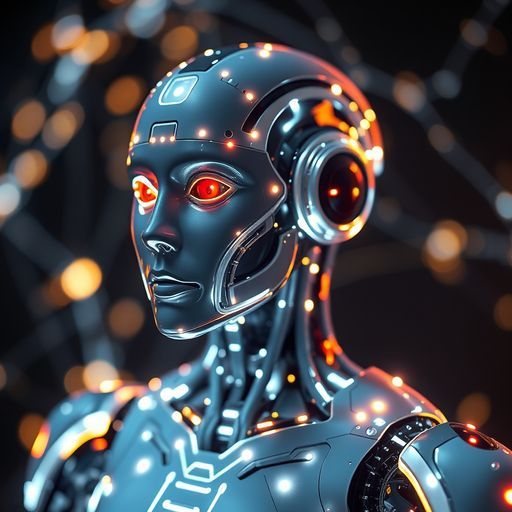
Artificial intelligence is one of the most talked-about technologies of our time. It appears in conversations about business growth, productivity, creativity, and even the future of society. But for many people, AI still feels confusing or intimidating. The technology sounds complex, technical, and sometimes mysterious.
Yet the truth is surprisingly simple: learning how to AI is really about learning how to work with intelligent tools.
You do not need to be a programmer, a mathematician, or a technology expert to begin using artificial intelligence. In fact, many people use AI every day without realizing it. What matters most is understanding how AI works, how to guide it effectively, and how to apply it to real problems.
This guide explains how beginners can start using AI in practical ways, why it is becoming such a powerful tool, and how anyone can begin developing AI skills.
—
What “How to AI” Really Means
When people search for “how to AI,” they are usually asking one of several questions:
How do I use AI tools?
How do I learn artificial intelligence?
How can AI help with work or productivity?
How do I get started without technical skills?
All of these questions point toward the same goal: learning how to use AI as a practical assistant in everyday tasks.
Artificial intelligence works by analyzing patterns in large amounts of information. Once it recognizes these patterns, it can generate responses, suggestions, summaries, or predictions based on what it has learned.
Instead of replacing human thinking, AI helps people process information faster and explore ideas more efficiently.
In many ways, AI acts like an intelligent collaborator that supports human decision-making.
—
Why Learning How to Use AI Matters
Artificial intelligence is quickly becoming part of modern life. Businesses use it to analyze data and automate repetitive tasks. Students use it to simplify complex topics. Creators use it to generate ideas and refine their work.
People who understand how to use AI gain several advantages:
They complete tasks faster
They generate ideas more easily
They analyze information more effectively
They improve productivity
Rather than viewing AI as a complicated technology reserved for experts, it is more helpful to see it as a tool that amplifies human ability.
Just as learning to use computers became essential in the past, learning how to use AI is becoming an important modern skill.
—
The Three Core Skills of Using AI
While artificial intelligence can perform many tasks, beginners only need to develop three basic skills to start using it effectively.
Asking Clear Questions
AI systems respond to instructions provided by users. The clearer the instruction, the more useful the response will be.
For example, vague questions may produce vague answers. Clear instructions provide better results.
A useful instruction often includes:
a specific topic
the goal of the task
the level of detail needed
the desired format of the answer
Learning to communicate clearly with AI is one of the most important beginner skills.
—
Exploring Ideas
Artificial intelligence can generate suggestions, examples, and perspectives that help people think creatively.
Many professionals now use AI to:
brainstorm ideas
outline projects
explore alternative solutions
generate creative concepts
Instead of replacing creativity, AI helps unlock it.
Think of AI as a brainstorming partner that can quickly generate possibilities.
—
Refining Results
The first answer produced by AI is rarely perfect. Effective users refine the output through follow-up instructions.
For example, you might ask AI to:
simplify an explanation
expand on a topic
provide examples
change the structure of a response
This back-and-forth interaction helps shape results into something more useful.
Over time, users become more skilled at guiding AI toward the outcome they want.
—
Practical Ways Beginners Can Use AI
Artificial intelligence becomes easier to understand when applied to real situations.
Here are several beginner-friendly ways to start using AI.
Idea Generation
AI can generate ideas for projects, articles, presentations, or business strategies.
By asking for multiple suggestions, users can quickly explore new directions.
—
Learning and Education
AI can explain difficult concepts in simpler language.
Students and lifelong learners can use it to break down complex topics and organize study notes.
—
Writing and Editing
Artificial intelligence can assist with writing tasks such as:
organizing outlines
improving clarity
rewriting text in simpler language
generating summaries
These abilities help people work more efficiently when producing written content.
—
Research Assistance
AI can analyze large amounts of information and extract key insights.
This helps users quickly understand the most important points in complex material.
—
Problem Solving
AI can suggest possible solutions to problems by analyzing patterns and generating ideas.
This makes it useful for brainstorming strategies and exploring different approaches.
—
Understanding What AI Cannot Do
While artificial intelligence is powerful, it is important to recognize its limitations.
AI systems do not truly understand information the way humans do. Instead, they rely on statistical patterns in data.
This means AI can sometimes produce incorrect or incomplete responses.
Users should always apply critical thinking and verify important information.
Artificial intelligence works best when combined with human judgment and expertise.
—
Developing Confidence With AI
Many beginners hesitate to experiment with artificial intelligence because they believe it requires advanced knowledge.
In reality, the best way to learn how to use AI is through experimentation.
Try asking different types of questions. Explore how the system responds to different instructions. Observe how refining instructions improves the results.
Over time, you will develop an intuitive sense of how to guide AI effectively.
Like any skill, confidence grows through practice.
—
The Future of AI Skills
Artificial intelligence is still evolving rapidly. As the technology improves, more industries will incorporate AI into everyday work.
People who learn how to use AI now will be better prepared for the future.
Rather than fearing artificial intelligence, the most productive approach is to understand it and learn how to use it responsibly.
AI will not replace human intelligence. Instead, it will increasingly become a partner that enhances human capability.
Those who learn how to collaborate with AI will gain powerful new tools for creativity, productivity, and innovation.
—
Frequently Asked Questions
What does “how to AI” mean?
It usually refers to learning how to use artificial intelligence tools effectively for tasks such as writing, research, and idea generation.
—
Do beginners need technical skills to use AI?
No. Many AI tools are designed so beginners can use them without programming knowledge.
—
What is the best first step in learning AI?
Start by experimenting with simple tasks such as summarizing information or generating ideas.
—
Can AI improve productivity?
Yes. AI can help automate repetitive work, organize information, and generate insights quickly.
—
Is artificial intelligence difficult to understand?
The deeper technical aspects can be complex, but the basic ideas are straightforward when explained clearly.
—
What mistakes do beginners make with AI?
Common mistakes include asking vague questions or expecting perfect results from the first response.
—
Will AI replace human jobs?
AI is more likely to change how people work rather than completely replace human roles.
—
Why is learning AI important today?
Understanding AI helps people adapt to new technologies and use intelligent systems to work more effectively.

Leave a Reply