
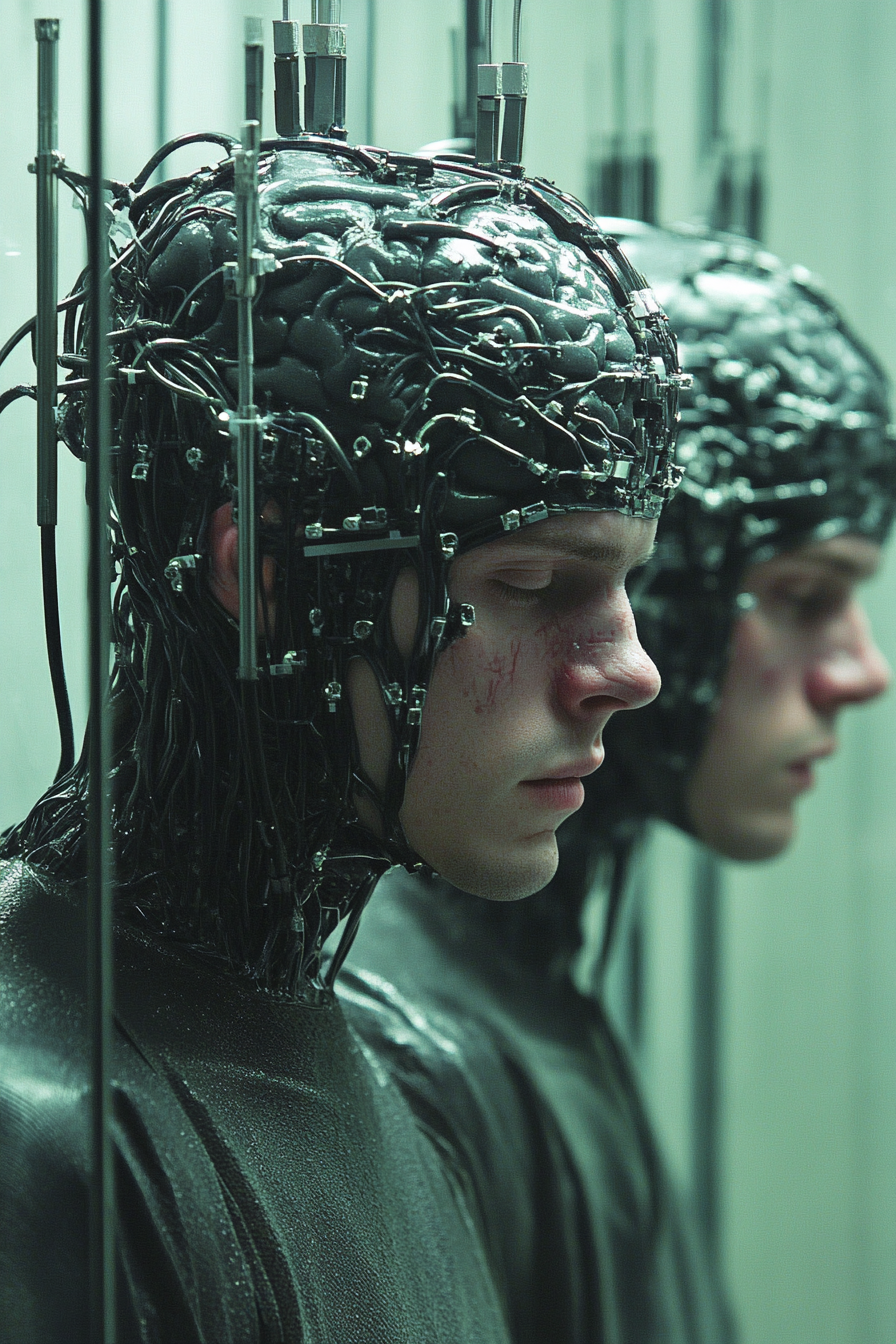
Have you ever wondered how machines can churn out text that sounds like it was written by a human? It’s a fascinating process that blends technology and creativity, and it all starts with Artificial Intelligence (AI). In this article, we’ll take a closer look at the magic behind AI text generation, breaking down the complex mechanics into bite-sized pieces. So, grab a cup of coffee and let’s dive into this intriguing world!
At its core, AI text generation involves the use of sophisticated algorithms and vast amounts of data. Imagine teaching a child how to write by showing them thousands of books. Similarly, AI learns from a plethora of written material, absorbing patterns, styles, and structures. This process is known as training, and it’s what equips AI with the ability to generate coherent and contextually relevant text.
But how does it all come together? Think of AI as a chef in a kitchen. Just as a chef combines ingredients to create a delicious dish, AI combines various elements of language—like grammar, syntax, and semantics—to produce text that flows naturally. The result? Content that can range from simple sentences to complex articles, all tailored to meet specific needs.
One of the most exciting aspects of AI text generation is its versatility. It can be used in various applications, from drafting emails to creating entire articles or even writing poetry! Imagine having a personal assistant that can whip up a report or generate creative ideas at the snap of your fingers. This capability opens up a world of possibilities for businesses, educators, and content creators alike.
However, with great power comes great responsibility. As we explore the potential of AI-generated text, it’s crucial to consider the implications it carries. Questions arise about authorship, misinformation, and the potential for bias in the content produced. Just like any tool, AI can be used for good or ill, and it’s up to us to steer it in the right direction.
In conclusion, AI text generation is not just a technological marvel; it’s a glimpse into the future of communication. As we continue to refine these systems and address the ethical considerations, we can harness this technology to enhance our lives in ways we’ve only just begun to imagine. So, whether you’re a curious reader or a professional looking to leverage AI in your work, understanding this technology is key to navigating the future of content creation.
Understanding Natural Language Processing
Natural Language Processing, or NLP, is the magical bridge that connects humans and machines through language. Imagine trying to teach a computer to understand the nuances of human speech—it’s a bit like teaching a toddler to speak! NLP enables machines to comprehend, interpret, and generate human language effectively, allowing for seamless communication. This technology is at the core of various applications, from chatbots to voice assistants, making our interactions with devices feel more natural and intuitive.
At its essence, NLP involves several complex processes that transform raw text into meaningful data. These processes can be broken down into a few key components:
- Tokenization: This is the first step where text is split into smaller units, or tokens, such as words or phrases. Think of it as chopping up a big cake into manageable slices!
- Parsing: Here, the structure of the sentences is analyzed to understand grammatical relationships. It’s like diagramming sentences in English class.
- Sentiment Analysis: This process determines the emotional tone behind a series of words. It’s akin to reading between the lines to gauge how someone feels.
With these components, NLP systems can execute various tasks, such as translating languages, summarizing text, or even generating creative content. The true power of NLP lies in its ability to learn from vast amounts of data, making it smarter over time. For instance, when you ask your voice assistant to play your favorite song, it understands your request by analyzing the context and intent behind your words.
Moreover, the advancements in NLP have been fueled by the rise of machine learning and deep learning techniques. These technologies allow machines to learn from examples and improve their performance without being explicitly programmed. It’s like teaching a dog new tricks by rewarding it when it gets it right!
As we continue to explore the world of NLP, it’s important to acknowledge its limitations as well. While machines have become remarkably proficient at understanding language, they still struggle with context and cultural nuances. For instance, sarcasm can often fly right over an AI’s head, leading to misunderstandings. Therefore, while NLP is a powerful tool, it’s not infallible and requires ongoing refinement and human oversight.
In conclusion, Natural Language Processing is an exciting field that is transforming how we interact with technology. By enhancing machines’ understanding of human language, we are paving the way for more engaging and productive interactions in our daily lives. As we look to the future, the potential for NLP to evolve and improve is boundless, promising an even more integrated relationship between humans and machines.
Machine Learning Techniques in Text Generation
When we talk about AI text generation, we can’t ignore the role of machine learning techniques. These techniques are the backbone of how machines learn to create text that mimics human writing. Imagine teaching a child how to write by showing them various examples and letting them practice. That’s essentially what machine learning does, but at a much grander scale and with more complexity!
Machine learning can be broadly categorized into three main types: supervised learning, unsupervised learning, and reinforcement learning. Each of these plays a unique role in the process of generating text. For instance, in supervised learning, the model learns from labeled data, which means it gets to see examples of correct outputs. Think of it like a teacher guiding a student through a series of exercises until they master the topic.
On the other hand, unsupervised learning is like exploring a new city without a map. The model tries to find patterns and relationships in data without any explicit guidance. This can lead to some surprising outputs, as the model might generate text based on associations it has learned rather than predefined rules. It’s fascinating to think about how this can lead to unexpected creativity!
Then there’s reinforcement learning, which is akin to training a pet. You reward the model for generating good text and penalize it for poor outputs. Over time, it learns to produce better results based on feedback. This technique is particularly useful in applications where the context and flow of conversation matter, like chatbots or virtual assistants.
At the heart of these techniques are neural networks, which simulate the human brain’s interconnected neuron structure. They allow machines to analyze vast amounts of data and recognize patterns that humans might miss. This is where the magic happens—by feeding these networks massive datasets, they can learn the nuances of language, including grammar, tone, and even cultural references.
To visualize how these techniques work together, consider the following table:
| Technique | Description | Use Case |
|---|---|---|
| Supervised Learning | Learning from labeled data | Text classification, sentiment analysis |
| Unsupervised Learning | Finding patterns in unlabeled data | Topic modeling, clustering |
| Reinforcement Learning | Learning through feedback | Chatbots, interactive storytelling |
In summary, machine learning techniques are essential for AI text generation, enabling machines to craft coherent and contextually relevant text. By employing a mix of supervised, unsupervised, and reinforcement learning, these systems become increasingly sophisticated, pushing the boundaries of what AI can achieve in the realm of language. Isn’t it incredible how these technologies work together to create something that feels so human?
Neural Networks and Their Role
Neural networks are the backbone of modern AI text generation, acting like a digital brain that processes information and generates human-like text. Imagine a network of interconnected neurons, similar to how our brains function; these neural networks learn from vast amounts of data, identifying patterns and relationships within the text. This capability allows them to produce coherent and contextually relevant content, making them indispensable in the field of Natural Language Processing (NLP).
At their core, neural networks consist of layers of nodes, or “neurons,” that work together to analyze input data. Each layer transforms the input into a more abstract representation, enabling the model to understand complex linguistic structures. The architecture of these networks can vary, but the most common type used for text generation is the recurrent neural network (RNN). RNNs are designed to handle sequential data, making them ideal for processing language, which is inherently sequential.
However, the advent of transformer models has revolutionized the way neural networks generate text. Unlike RNNs, transformers can process entire sentences simultaneously, allowing them to capture context and relationships between words more effectively. This shift has led to significant improvements in text generation quality. Transformers utilize mechanisms such as attention layers, which help the model focus on relevant parts of the input when generating text, much like how we pay attention to certain details in a conversation while ignoring others.
To illustrate the difference, consider the following table comparing RNNs and transformer models:
| Feature | RNN | Transformer |
|---|---|---|
| Processing Method | Sequential | Parallel |
| Attention Mechanism | Limited | Extensive |
| Context Understanding | Short-term | Long-term |
| Training Speed | Slower | Faster |
As we delve deeper into the world of AI text generation, it’s crucial to recognize the profound impact neural networks have on our ability to create and understand language. They not only enhance the quality of generated content but also pave the way for more advanced applications, such as conversational agents and automated content creation tools. In essence, neural networks serve as the engine driving the evolution of AI in text generation, continuously learning and adapting to produce text that resonates with human readers.
Transformers: Revolutionizing Text Generation
The advent of transformer models has marked a significant turning point in the landscape of AI text generation. Unlike traditional models that processed text sequentially, transformers operate on an entirely different principle. They utilize a mechanism called self-attention, which allows them to weigh the importance of different words in a sentence, regardless of their position. This means that transformers can understand context and relationships between words in a much more nuanced way, leading to more coherent and contextually relevant text generation.
Imagine trying to understand a long story without being able to remember the characters or events that happened earlier. Traditional models might struggle, but transformers excel in this regard. They can look back at the entire context of a conversation or a paragraph, making them incredibly effective for generating text that feels natural and human-like. This ability to grasp the bigger picture is akin to having a conversation with a friend who remembers all the details of your previous chats, making the dialogue fluid and engaging.
One of the standout features of transformers is their parallel processing capability. This means they can analyze multiple words at once rather than one at a time, significantly speeding up the text generation process. As a result, transformers can generate text at an impressive pace, a critical advantage in today’s fast-paced digital world where content needs to be produced rapidly to keep up with demand.
Furthermore, transformers have led to the development of various state-of-the-art models such as BERT and GPT. These models have set new benchmarks in numerous natural language processing tasks, including translation, summarization, and even creative writing. For instance, GPT-3, one of the most well-known transformer models, can generate essays, poems, and even code, showcasing the versatility of this technology.
Here’s a brief comparison of traditional models versus transformers:
| Aspect | Traditional Models | Transformers |
|---|---|---|
| Processing Method | Sequential | Parallel |
| Context Understanding | Limited | High |
| Speed | Slower | Faster |
| Model Examples | RNN, LSTM | BERT, GPT |
In summary, transformers are not just a passing trend; they are reshaping the way we think about AI text generation. Their ability to understand context, process information quickly, and generate high-quality text makes them a cornerstone of modern AI applications. As we continue to explore the potential of these models, it’s exciting to consider how they will further evolve and enhance our interactions with technology.
Applications of AI Text Generation
AI text generation is not just a futuristic concept; it’s a technology that is already making waves across various industries. Imagine a world where machines can write articles, create marketing content, and even assist in education—all while sounding like a human. This is the reality we are stepping into, and the implications are profound. From businesses to education, and even the entertainment industry, AI-generated text is transforming the way we create and consume content.
In the business sector, AI text generation is streamlining content creation processes. Companies are utilizing AI to produce product descriptions, marketing materials, and even customer service responses. This not only saves time but also ensures consistency in tone and style. For example, a major e-commerce platform might use AI to generate thousands of product descriptions in a fraction of the time it would take a human writer. This allows businesses to focus on strategy while AI handles the repetitive tasks.
In education, AI text generation is proving to be a game-changer. Teachers and students can benefit from AI tools that generate quizzes, summaries, and even personalized learning materials. Imagine a student struggling with a topic; they can use an AI tool to create a tailored study guide that addresses their specific needs. This kind of personalized learning experience can significantly enhance understanding and retention of information.
The entertainment industry has also embraced AI text generation. Scriptwriters can use AI to brainstorm ideas, generate dialogue, or even draft entire scripts. This technology can act as a creative partner, helping writers overcome writer’s block and explore new narrative possibilities. For instance, a screenwriter might input a basic premise into an AI system, which would then generate multiple plot ideas, giving the writer a plethora of options to choose from.
Moreover, AI-generated content is making its way into journalism. News organizations are using AI to create articles based on data, such as sports scores or financial reports. This allows journalists to focus on in-depth reporting and investigative work while the AI handles the more straightforward reporting tasks. A recent study found that AI-generated articles can be indistinguishable from those written by humans, raising questions about the future of journalism.
In summary, the applications of AI text generation are vast and varied, touching nearly every aspect of our lives. As this technology continues to evolve, we can expect to see even more innovative uses that enhance productivity and creativity across different sectors. The future is bright, and AI is leading the way in redefining how we think about content creation.
Ethical Considerations in AI Text Generation
As we navigate the exciting landscape of AI text generation, it’s crucial to pause and reflect on the ethical considerations that accompany this technology. With great power comes great responsibility, and AI-generated text is no exception. Let’s take a closer look at some of the pressing ethical issues that arise from the use of AI in creating content.
One of the most significant concerns is the potential for misinformation. AI systems can produce text that appears credible and informative, but what happens when that information is inaccurate or misleading? The ability of AI to generate content at scale means that false narratives can spread rapidly, leading to confusion and mistrust among readers. This raises the question: how do we ensure that AI-generated content is both accurate and reliable?
Another ethical dilemma revolves around authorship. When AI generates a piece of writing, who should be credited as the author? Is it the developer of the AI, the user who prompted it, or the AI itself? This ambiguity complicates traditional notions of authorship and intellectual property. As we embrace AI in content creation, it’s essential to establish clear guidelines on ownership and credit.
Furthermore, there is the risk of bias in AI-generated content. AI systems learn from vast datasets, which may contain inherent biases based on the information they were trained on. If these biases are not addressed, AI can perpetuate stereotypes and reinforce societal inequalities. It’s vital for developers to implement measures that identify and mitigate bias in AI algorithms, ensuring that the content produced is fair and representative.
To better understand these ethical challenges, consider the following table that summarizes key issues:
| Ethical Issue | Description |
|---|---|
| Misinformation | The risk of AI generating false or misleading information. |
| Authorship | Questions surrounding who owns and should be credited for AI-generated content. |
| Bias | The potential for AI to reinforce existing societal biases through its training data. |
In conclusion, while AI text generation offers incredible possibilities for innovation and efficiency, it also brings forth a myriad of ethical challenges that we must address. As we continue to explore this technology, fostering a dialogue about these ethical considerations is essential. By doing so, we can harness the power of AI responsibly, ensuring that it serves as a tool for positive change rather than a source of harm.
The Future of AI in Text Generation
The future of AI text generation is not just bright; it’s dazzling! As we stand on the brink of unprecedented technological advancements, the potential for AI to reshape how we communicate, create, and consume content is immense. Imagine a world where machines not only assist us in writing but also understand the subtle nuances of human emotion and intent. This is not merely science fiction; it’s rapidly becoming a reality.
One of the most exciting aspects of this future is the potential for enhanced creativity. AI tools are evolving to not just generate text but to collaborate with writers, artists, and creators. Instead of replacing human creativity, these technologies can serve as a springboard, providing ideas, suggestions, and even complete drafts that can be refined by human hands. Think of it as having a highly skilled assistant who can brainstorm with you at any hour of the day!
Moreover, the integration of AI text generation into various sectors is set to expand dramatically. For instance, in the education sector, personalized learning experiences powered by AI will allow students to receive tailored content that meets their unique needs. In business, companies can leverage AI to create compelling marketing copy, reports, and even customer service responses, all while maintaining a consistent brand voice. The possibilities are endless!
However, with great power comes great responsibility. As AI continues to evolve, so do the ethical considerations surrounding its use. Concerns about misinformation, authorship, and bias in AI-generated content are paramount. It’s essential that as we advance, we also establish guidelines and frameworks to ensure that AI is used responsibly. This means developing systems that can verify the authenticity of AI-generated texts and promote transparency in how these technologies are deployed.
Looking ahead, innovations are on the horizon that promise to further revolutionize AI text generation. For example, advancements in deep learning and contextual understanding will lead to even more sophisticated models that can generate text indistinguishable from that written by humans. Imagine a future where AI can write a novel or compose a song that resonates deeply with its audience!
As we embrace these changes, we must also consider the impact on employment and content creation. Will AI replace jobs? While some roles may evolve or diminish, new opportunities will undoubtedly arise. The key will be to adapt and learn how to work alongside these intelligent systems. Industries will need to rethink their strategies and embrace AI as a tool for enhancing human capabilities rather than a replacement for them.
In summary, the future of AI in text generation is not just about creating text; it’s about enhancing the human experience. As we navigate this exciting landscape, we must remain vigilant about the ethical implications while embracing the incredible possibilities that lie ahead. After all, the best stories are those we create together, blending human creativity with the power of artificial intelligence.
Innovations on the Horizon
As we look to the future, the landscape of AI text generation is poised for remarkable innovations that promise to redefine how we interact with technology. Imagine a world where machines not only generate text but also understand the subtleties of human emotion, context, and creativity. This is not just a fantasy—it’s rapidly becoming a reality.
One of the most exciting advancements on the horizon is the development of context-aware AI systems. These systems will leverage vast amounts of data to generate text that is not only coherent but also deeply relevant to the user’s needs. For instance, imagine an AI that can create personalized content based on your previous interactions, preferences, and even your current mood. This level of customization could transform everything from marketing strategies to personal communication.
Moreover, the integration of multimodal AI is set to enhance text generation capabilities. By combining text with other forms of media—such as images, audio, and video—AI can create richer, more engaging content. For example, an AI could generate a blog post that includes relevant images and audio clips, making the reading experience more immersive. This could be particularly beneficial in fields like education, where diverse content types can cater to different learning styles.
Additionally, the emergence of explainable AI is crucial. As AI systems become more complex, understanding their decision-making processes will be essential. Innovations in this area will allow users to see how AI-generated content is created, fostering trust and transparency. This is especially important in sectors like journalism and academia, where the credibility of content is paramount.
Here’s a quick overview of some key innovations we can expect:
| Innovation | Description |
|---|---|
| Context-Aware AI | AI that customizes content based on user preferences and emotional context. |
| Multimodal AI | Integration of text with images, audio, and video for richer content creation. |
| Explainable AI | AI systems that provide transparency in their content generation processes. |
As these innovations unfold, they will not only enhance the quality of AI-generated text but also expand its applications across various industries. From personalized marketing campaigns to tailored educational content, the possibilities are endless. The future of AI text generation is bright, and it beckons us to embrace these changes with open arms. So, are you ready to explore this new frontier?
Impact on Employment and Content Creation
The rise of AI text generation is creating a buzz in various industries, and understandably so! As machines become more adept at producing human-like text, the implications for employment and content creation are profound. Imagine a world where AI can draft articles, create marketing copy, or even write entire novels. Sounds exciting, right? But, it also raises some important questions about job security and the future of creative professions.
On one hand, AI text generation can enhance productivity. For example, writers can use AI tools to brainstorm ideas or generate drafts, allowing them to focus on refining their work rather than starting from scratch. This can lead to a more efficient workflow, enabling content creators to produce higher volumes of work without sacrificing quality. However, this efficiency comes with a caveat: as AI continues to improve, some roles traditionally held by humans may become obsolete. The fear of job displacement is real, particularly in fields like journalism, marketing, and even technical writing.
To illustrate this impact, consider the following table that outlines potential changes in job roles:
| Job Role | Potential Impact |
|---|---|
| Content Writer | Increased efficiency but potential for reduced demand as AI generates content. |
| Journalist | Possibility of AI-generated news articles, which may lead to fewer positions. |
| Social Media Manager | AI can automate posts and generate captions, potentially reducing the need for human oversight. |
| Copywriter | AI tools can assist in generating copy, but creative strategy still requires human touch. |
Despite these challenges, the integration of AI into content creation doesn’t necessarily spell doom for employment. Instead, it may shift the focus of certain roles. For instance, rather than merely writing, professionals might need to become adept at managing and curating AI-generated content. This means that skills in AI literacy and data analysis will become increasingly valuable. Workers will need to adapt, embracing new technologies and learning how to collaborate with AI systems effectively.
Moreover, while AI can generate text, it often lacks the emotional depth, creativity, and cultural context that human writers bring to their work. This opens up opportunities for professionals to carve out niches that AI cannot fill. The future may see a hybrid model where human creativity is complemented by AI efficiency, leading to a richer tapestry of content that resonates with audiences on a deeper level.
In conclusion, the impact of AI text generation on employment and content creation is multifaceted. While it poses challenges, it also presents new opportunities for those willing to evolve. The key will be to embrace these changes, harnessing the power of AI while preserving the unique qualities that only human creators can offer.
Frequently Asked Questions
- What is AI text generation?
AI text generation refers to the process where artificial intelligence creates human-like text based on input data. It utilizes complex algorithms and models, such as neural networks and transformers, to generate coherent and contextually relevant content.
- How does Natural Language Processing (NLP) contribute to AI text generation?
NLP is essential for AI text generation as it enables machines to understand, interpret, and produce human language. By analyzing linguistic patterns and context, NLP helps AI generate responses that are not only accurate but also relatable to human users.
- What machine learning techniques are used in AI text generation?
Common machine learning techniques include supervised learning, unsupervised learning, and reinforcement learning. These methods help train AI models to recognize patterns and generate text that aligns with human-like writing styles.
- What role do neural networks play in AI text generation?
Neural networks are the backbone of modern AI text generation. They mimic the human brain’s structure and function, allowing AI to learn from vast amounts of text data and produce responses that are contextually appropriate and grammatically correct.
- How have transformers changed the landscape of text generation?
Transformers have revolutionized text generation by improving the AI’s ability to understand context and relationships within the text. They allow for more nuanced and coherent content creation compared to traditional models, making AI-generated text feel more natural.
- What are some applications of AI text generation?
AI text generation is used across various sectors, including business for marketing content, education for personalized learning materials, and entertainment for scriptwriting and storytelling. Its versatility makes it a valuable tool in content creation.
- What ethical considerations should we be aware of with AI text generation?
As AI text generation becomes more prevalent, ethical concerns such as misinformation, authorship rights, and potential biases in generated content arise. It’s crucial to address these issues to ensure responsible use of AI technology.
- What does the future hold for AI text generation?
The future of AI text generation looks promising, with advancements in technology expected to enhance communication and creativity. Innovations on the horizon may lead to even more sophisticated models that can produce higher quality content.
- How might AI text generation impact employment in content creation?
The rise of AI text generation raises questions about job displacement in content creation. However, it may also lead to new opportunities as industries adapt and evolve, requiring new skills to work alongside AI technologies.
Leave a Reply