
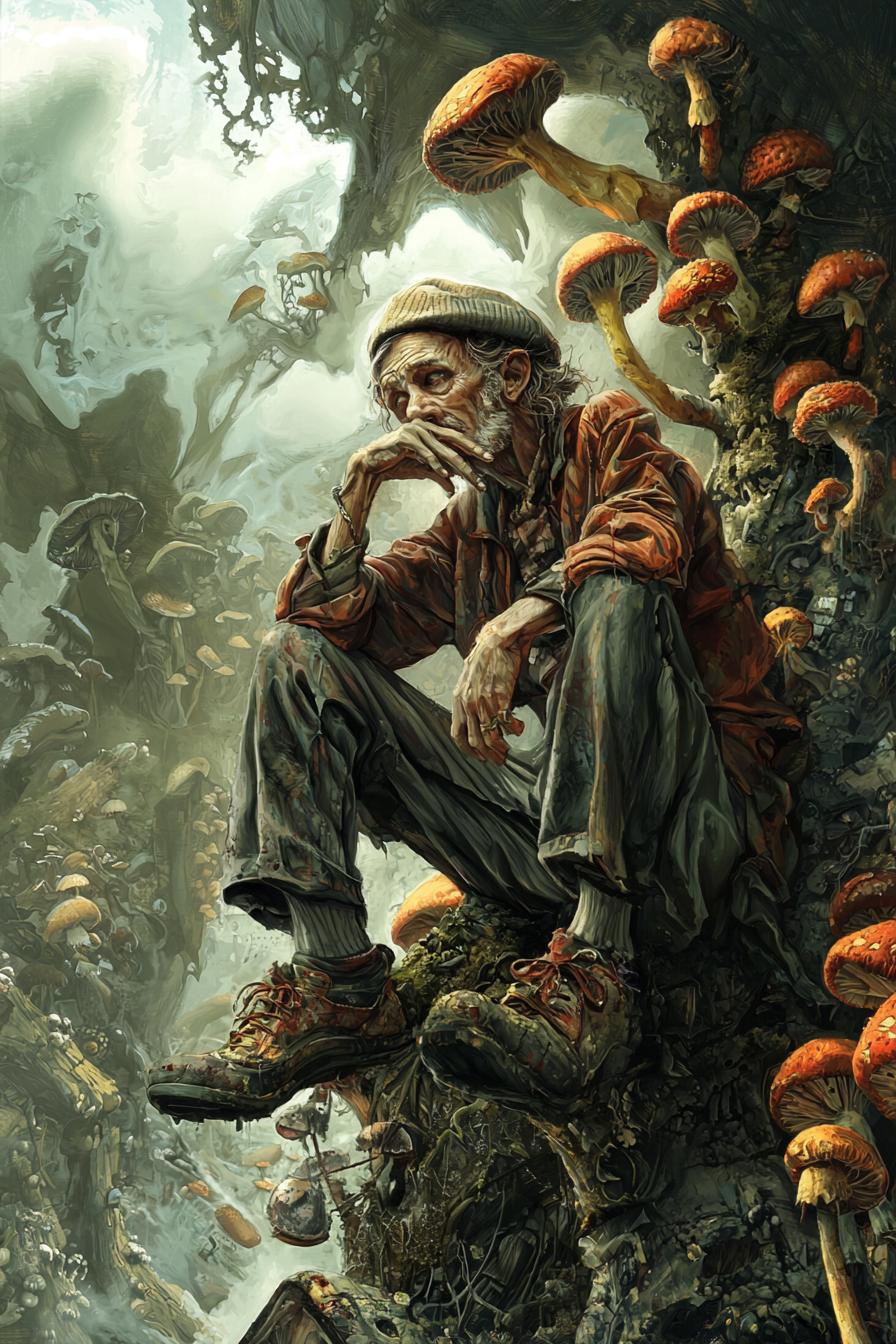
Imagine a world where you can simply describe a scene, and within moments, a stunning image materializes before your eyes. This is not just a dream anymore; it’s the reality brought to life by artificial intelligence! The journey from text to image is nothing short of magical, leveraging the power of advanced algorithms and deep learning to transform mere words into vivid visuals. This article delves into how this incredible technology works, its applications, and what it means for creativity and innovation.
At the core of this transformation is a combination of natural language processing and computer vision. These two fields collaborate to interpret textual descriptions and generate images that match those descriptions. Just think of it as a digital artist that can read your mind! With every iteration, these AI models learn from vast datasets, improving their ability to understand context and nuance in language, which is essential for producing high-quality images. The synergy between language and visual representation opens up a myriad of possibilities, making it easier for anyone to bring their ideas to life.
The implications of text-to-image AI stretch far beyond mere curiosity. In industries such as marketing, businesses can create tailored visuals to enhance their campaigns, making their messages more impactful. In art and design, artists are using these tools to explore new creative avenues, pushing the boundaries of traditional art forms. This technology is democratizing creativity, allowing those without formal artistic training to express themselves visually. Imagine a budding writer who can now visualize their characters or settings simply by typing a description—how empowering is that?
However, the journey is not without its challenges. Developers face numerous hurdles, including ensuring that the generated images accurately reflect the intended message. Sometimes, AI can misinterpret context or produce ambiguous results that leave users scratching their heads. For instance, a simple description like “a dog in a park” could lead to wildly different images depending on how the AI interprets the text. This unpredictability can be frustrating, but it also highlights the ongoing need for improvement in AI training and data quality.
As we look to the future, the possibilities seem endless. We can anticipate advancements that will enhance realism and user interaction, making the process even more intuitive. Ethical considerations will also come to the forefront, as we grapple with questions about ownership and originality in a world where machines can create art. Will we see a new era of collaboration between human creativity and AI, or will it lead to a dilution of artistic expression?
The journey from text to image with AI is a fascinating exploration of technology and creativity. It invites us to rethink how we create and consume art, pushing the boundaries of what is possible. As we embrace this change, we must also consider the implications it carries for the future of creativity and innovation.
The Technology Behind Text-to-Image AI
The journey of converting text into images is a fascinating blend of technology and creativity, fundamentally powered by artificial intelligence. At the heart of this transformation lies a variety of sophisticated algorithms and models that allow machines to interpret text and generate corresponding images. The most notable advancements in this field have emerged from the realms of deep learning and neural networks, which mimic the way human brains process information.
To understand how this technology works, we must first delve into the architecture of neural networks. These networks consist of layers of interconnected nodes, or “neurons,” that process data in a hierarchical manner. When it comes to text-to-image generation, models like Generative Adversarial Networks (GANs) and transformers play pivotal roles. GANs, for instance, involve two neural networks—the generator and the discriminator—working against each other. The generator creates images based on textual input, while the discriminator evaluates their authenticity. This back-and-forth process leads to increasingly realistic images over time.
Another significant player in this arena is the CLIP (Contrastive Language–Image Pre-training) model, developed by OpenAI. CLIP effectively understands the relationship between images and text by training on a vast dataset of images paired with their descriptions. This allows it to generate images that not only match the textual input but also capture the nuances of meaning and context. The synergy between these technologies creates a powerful ecosystem where text can be transformed into stunning visuals.
However, the technological landscape is constantly evolving. Recent innovations have introduced Diffusion Models, which gradually refine images from random noise into coherent visuals, guided by the textual description provided. This method has shown promise in producing high-quality outputs that are both detailed and contextually relevant. As these technologies continue to advance, the potential for real-time image generation becomes more feasible, paving the way for interactive applications that can respond to user inputs instantly.
To put it all into perspective, here’s a simplified comparison of some key technologies used in text-to-image AI:
| Technology | Functionality | Strengths |
|---|---|---|
| GANs | Generates images through adversarial training | High realism, iterative improvement |
| CLIP | Connects text and images through pre-training | Contextual understanding, versatility |
| Diffusion Models | Refines images from noise based on text | High detail, gradual enhancement |
As we explore the technology behind text-to-image AI, it’s clear that the convergence of these advanced models is not just a technical achievement; it’s a gateway to new forms of expression and innovation. The implications of this technology extend beyond mere image generation; they challenge our understanding of creativity and open doors to entirely new artistic possibilities. So, as we continue to push the boundaries of what AI can achieve, one can’t help but wonder: what incredible images will we create from words in the future?
Applications of Text-to-Image AI
Text-to-image AI is revolutionizing various industries by transforming the way we visualize concepts and ideas. Imagine being able to describe a scene or an object in words, and within moments, seeing a stunning image that perfectly captures your description. This technology is not just a futuristic dream; it’s happening right now! From art and design to marketing and content creation, the applications of text-to-image AI are vast and incredibly exciting.
In the realm of art and design, artists are using text-to-image generators to explore new creative avenues. They can input descriptions of their imaginative visions and watch as AI brings those visions to life. This process not only enhances the creative workflow but also opens up new possibilities for artistic expression. For instance, an artist might type “a serene landscape with a purple sky and a glowing lake,” and the AI will generate a unique image that reflects this description. This collaboration between human creativity and AI capabilities is like painting with words!
Moreover, in marketing, businesses are leveraging text-to-image AI to create compelling visuals for their campaigns. Imagine a marketing team brainstorming ideas for a new product launch. Instead of relying solely on stock images or traditional graphic design, they can generate custom visuals that resonate with their target audience. By inputting specific attributes of the product, such as “a sleek, modern smartwatch with a vibrant display,” they can quickly produce eye-catching images that enhance their promotional materials. This not only saves time but also allows for greater customization and alignment with brand identity.
Content creators are also finding immense value in this technology. Writers and bloggers can generate relevant images to accompany their articles, enhancing the reader’s experience. For example, a travel writer might describe a bustling market in Marrakech, and with a simple text prompt, they can receive a stunning visual representation to complement their narrative. This integration of text and imagery creates a more engaging and immersive experience for the audience.
In the field of education, text-to-image AI can serve as a powerful tool for teaching and learning. Educators can create visual aids that help students understand complex concepts. For instance, a science teacher can describe a chemical reaction in words, and the AI can produce an illustrative image that visually represents the process. This not only aids comprehension but also caters to different learning styles, making education more accessible and engaging.
As we explore the applications of text-to-image AI, it’s evident that its impact is profound and far-reaching. From enhancing artistic creativity to transforming marketing strategies and enriching educational experiences, the potential is limitless. The only question that remains is: what will we create next? With each advancement, we are not just witnessing a technological evolution; we are participating in a creative revolution that promises to reshape the way we interact with the world around us.
Challenges in Text-to-Image Generation
Creating stunning images from text descriptions is no small feat, and while the advancements in AI technology are impressive, they come with a unique set of challenges. One of the primary hurdles is achieving contextual understanding. Imagine trying to paint a picture based solely on a vague description; it can lead to wildly different interpretations. Similarly, AI struggles with ambiguity in language, where a single phrase can convey multiple meanings. For instance, the word “bank” could refer to a financial institution or the side of a river, and without proper context, the generated image may not align with the intended concept.
Another significant challenge lies in the quality of output. High-resolution images that maintain clarity and detail are essential, especially in professional settings. However, many AI models still produce images that lack the finesse and realism required for practical applications. This is where computational limitations come into play. Generating high-quality images demands substantial processing power and memory, which can be a barrier for many developers, especially those working with limited resources.
Moreover, the training datasets used to teach these AI models can also pose problems. If the data is biased or lacks diversity, the resulting images may reflect those shortcomings. For example, if an AI is trained predominantly on images of certain cultures or demographics, it may struggle to accurately represent others, leading to a lack of inclusivity in its outputs. This raises ethical concerns about the responsibility of developers to ensure their models are trained on comprehensive datasets that reflect the world’s diversity.
In addition to these technical challenges, there is also the question of user interaction. For AI to generate images that truly resonate with users, it needs to understand not just the words but the emotions and intentions behind them. This requires a level of sophistication in natural language processing that is still a work in progress. Developers are continuously working to improve how AI interprets and translates human emotion into visual forms, but it’s a complex task that requires ongoing refinement.
Finally, we cannot overlook the implications of intellectual property and originality. As AI generates images based on existing styles and concepts, questions arise about ownership and authorship. Who owns the rights to an image created by AI? Is it the developer, the user, or does it belong to the AI itself? These are critical discussions that need to take place as text-to-image technology continues to evolve.
In summary, while the journey from text to image through AI is filled with exciting possibilities, it is equally fraught with challenges that developers must navigate. From contextual understanding and output quality to ethical considerations and user interaction, each obstacle presents an opportunity for growth and innovation in this fascinating field.
The Future of Text-to-Image AI
The future of text-to-image AI is not just a glimpse into a world of possibilities; it’s a vibrant tapestry of innovation waiting to be woven. Imagine a time when you can simply describe your wildest dreams, and an AI can bring them to life in stunning detail. This technology is on the brink of revolutionizing how we create and consume visual content, and the implications are both thrilling and thought-provoking.
As we look ahead, several advancements are likely to shape the trajectory of text-to-image AI. For starters, improvements in realism are on the horizon. Current models have made significant strides, but the images they generate can still fall short of capturing the nuances of human creativity. Future developments will likely focus on enhancing the fidelity of generated images, making them indistinguishable from photographs or paintings created by human hands.
Moreover, user interaction will evolve dramatically. Imagine a world where you can not only input text but also specify emotions, styles, and even color palettes. This level of customization could transform how artists and designers work, allowing them to iterate on ideas faster than ever before. The AI could become a collaborative partner, interpreting your vision and offering suggestions that expand your creative horizons.
However, with great power comes great responsibility. The ethical considerations surrounding text-to-image AI cannot be overlooked. As the technology becomes more accessible, questions about originality and authorship will arise. Who owns an image generated by AI based on a user’s prompt? This debate will likely lead to new legal frameworks and guidelines that govern the use of AI in creative industries.
Furthermore, the implications for industries such as marketing and advertising are profound. Companies could harness this technology to generate tailored visuals in real-time, responding to consumer trends and preferences almost instantaneously. This could lead to a shift in how brands communicate, making their messaging more dynamic and personalized.
In summary, the future of text-to-image AI is a thrilling frontier filled with potential. As we continue to push the boundaries of what’s possible, we must remain mindful of the ethical and societal implications that accompany these advancements. The journey is just beginning, and the possibilities are as limitless as our imagination.
Impact on Creativity and Art
The rise of text-to-image AI is nothing short of a revolution in the creative world. Imagine being able to conjure up stunning visuals just by describing them in words! This technology is like having a magic paintbrush that understands your every whim. Artists and designers are now exploring new realms of creativity, where the only limit is their imagination. With AI tools like DALL-E and Midjourney, the process of creation has been transformed into a collaborative dance between human and machine.
One of the most exciting aspects of this technology is its ability to democratize art. Previously, artistic skills were often gatekept by years of training and practice. Now, anyone with a vivid imagination can create visuals that rival traditional artwork. This shift is akin to handing a canvas and paint to someone who has never picked up a brush before, yet they can create a masterpiece simply by describing it. However, this raises some intriguing questions about originality and authorship in the digital age.
As artists embrace these tools, they are not just using AI to replicate their style but are also discovering new techniques that challenge the very notion of what art can be. For instance, AI-generated art can be a source of inspiration, sparking new ideas that artists might not have considered. It’s like having a brainstorming partner that never runs out of creativity! Yet, this partnership can also be contentious. Some artists feel that relying on AI may dilute the essence of human creativity, leading to a debate about the value of traditional artistic skills versus the innovative potential of technology.
Moreover, the impact on art extends beyond individual creators. In the commercial realm, businesses are harnessing this technology to create unique marketing materials, product designs, and branding elements. Imagine a marketing team generating tailored visuals for a campaign in seconds, all based on the latest trends and consumer preferences. This fusion of art and technology not only enhances productivity but also allows for more personalized and engaging content. The following table outlines some key areas where text-to-image AI is making waves:
| Field | Application |
|---|---|
| Art | AI-generated paintings and illustrations |
| Marketing | Custom visuals for campaigns |
| Fashion | Designing clothing and accessories |
| Gaming | Creating game assets and environments |
As we look to the future, it’s clear that text-to-image AI is not just a trend; it’s a profound shift in how we think about creativity and art. While it opens up a world of possibilities, it also challenges us to redefine our understanding of what it means to be an artist. Are we merely curators of ideas, or does the act of generating images through AI still hold the essence of artistry? The answers to these questions will shape the future of creativity in ways we can only begin to imagine.
Frequently Asked Questions
- What is text-to-image AI?
Text-to-image AI is a technology that uses artificial intelligence to generate images based on textual descriptions. It interprets the words provided and creates visual representations, making it a fascinating blend of language and creativity.
- How does text-to-image AI work?
This technology primarily relies on advanced algorithms and deep learning models, particularly neural networks. These systems are trained on vast datasets of images and their corresponding descriptions, allowing them to learn how to translate text into visual elements.
- What are the applications of text-to-image AI?
Text-to-image AI has a wide range of applications, from enhancing creativity in art and design to improving marketing strategies by generating custom visuals. It’s also used in content creation, helping writers and marketers visualize their ideas more effectively.
- What challenges does text-to-image AI face?
Despite its potential, text-to-image AI encounters several challenges, such as understanding context and handling ambiguous descriptions. Additionally, computational limitations can affect the quality and accuracy of the generated images.
- What does the future hold for text-to-image AI?
The future of text-to-image AI looks promising, with ongoing advancements expected to improve realism and user interaction. However, ethical considerations surrounding its use, particularly in terms of originality and authorship, will need to be addressed.
- How is text-to-image AI impacting creativity and art?
This technology is reshaping the creative landscape by providing artists and designers with new tools for expression. It raises intriguing questions about the nature of creativity and the definition of authorship in the digital age.
Leave a Reply