
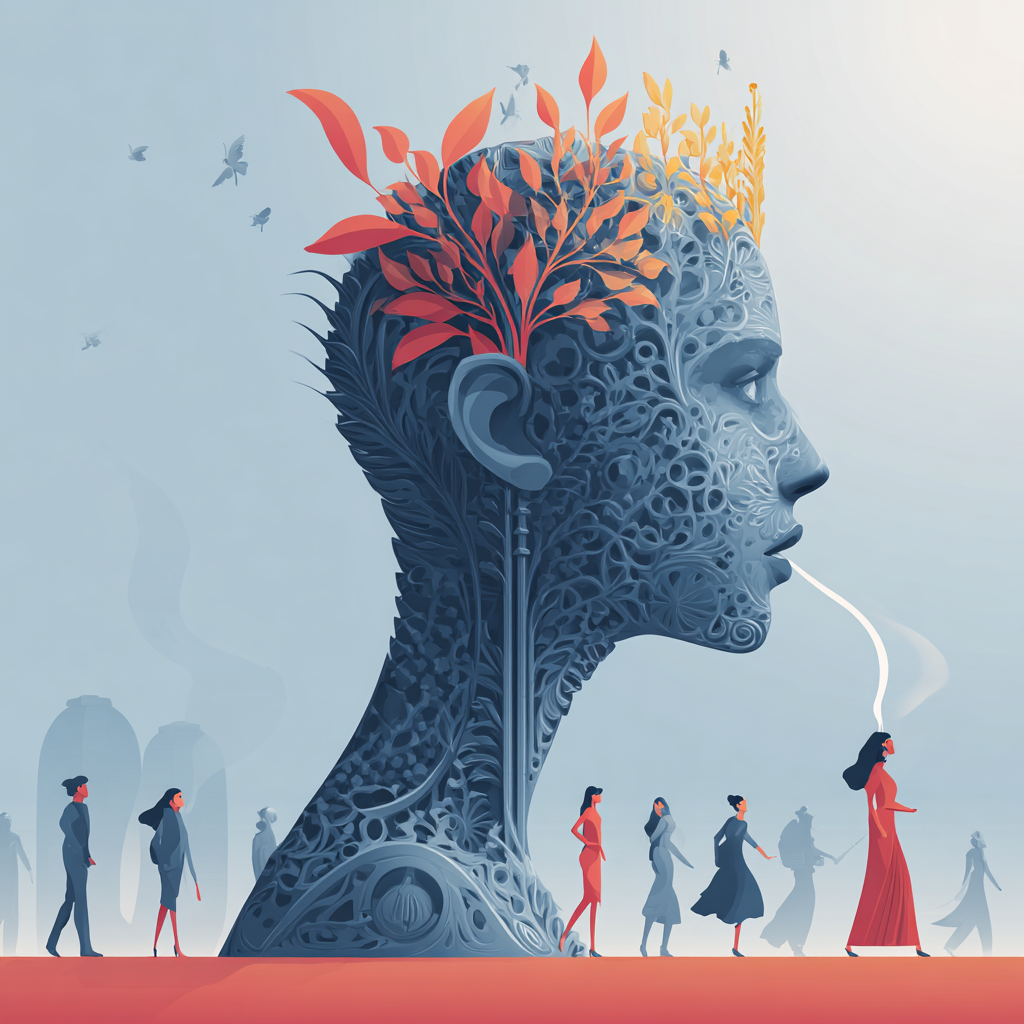
Marketing used to be about visibility. Then it became about engagement. Today, it’s about intelligence.
New Zealand businesses are operating in one of the most demanding marketing environments they’ve ever faced. Customers are informed, comparison-driven, and impatient. Competition is no longer just local; global businesses can target Kiwi audiences with the same ease as a company down the road. At the same time, advertising costs are rising, and attention is becoming harder to earn.
In this landscape, doing “more marketing” is rarely the answer. Doing smarter marketing is.
This is where AI-powered marketing steps in—not as a futuristic concept, but as a practical, proven way to drive growth with clarity, efficiency, and confidence. When applied strategically, AI allows businesses to understand customers better, make faster decisions, and turn marketing into a system that continuously improves.
This article explores how AI-powered marketing works, why it is uniquely valuable for businesses in New Zealand, and how to apply it in practical, results-focused ways.
—
Why New Zealand Businesses Feel the Pressure More Than Most
New Zealand’s market has characteristics that amplify both success and failure:
A smaller population means every lead has higher value
Customers research deeply before committing
Digital channels are crowded with both local and overseas competitors
Budgets must be used carefully to maintain profitability
Traditional marketing methods often rely on lagging indicators. Campaigns are launched, results are reviewed weeks later, and changes are made after performance has already plateaued. In a fast-moving digital environment, this delay is expensive.
AI-powered marketing changes the model by enabling real-time learning and adaptation. Instead of waiting for reports, businesses gain ongoing insight into what’s working and why—and can act immediately.
—
What AI-Powered Marketing Really Is (Without the Hype)
AI-powered marketing uses machine learning, predictive analysis, and automation to support better decisions across the entire marketing funnel. It doesn’t replace human expertise. It removes friction, uncertainty, and wasted effort.
In practical terms, AI can:
Analyse large volumes of customer and campaign data instantly
Identify patterns and opportunities humans might miss
Predict which users are most likely to convert
Personalise messaging and content automatically
Optimise campaigns while they are running
Automate repetitive tasks that slow teams down
The outcome is marketing that becomes more accurate and more effective over time, rather than relying on assumptions or one-off insights.
—
AI-Driven SEO: Turning Search Traffic Into Revenue Opportunities
Search engine optimisation is no longer about ranking for isolated keywords. Modern search engines prioritise content that best satisfies user intent—the reason behind a search.
AI-driven SEO helps businesses:
Identify high-intent search opportunities competitors overlook
Understand how topics, questions, and subtopics connect
Optimise existing pages using engagement and behaviour signals
Strengthen internal linking and topical authority automatically
For New Zealand businesses, this approach is especially powerful. Instead of chasing large volumes of low-value traffic, AI-driven SEO focuses on attracting visitors who are actively looking for solutions and are far more likely to enquire or buy.
In a smaller market, intent-focused traffic consistently outperforms raw volume.
—
Programmatic SEO: Scaling Search Visibility Without Scaling Costs
Programmatic SEO is one of the most impactful AI growth strategies available today. It uses structured data and intelligent templates to create and optimise large numbers of targeted pages automatically.
This strategy works particularly well for businesses that:
Serve multiple regions, cities, or service areas
Offer a wide range of services or variations
Want to capture long-tail search demand
Need consistent quality at scale
Instead of manually creating hundreds of pages, AI generates, updates, and optimises them continuously. Human teams focus on positioning, messaging, and quality control, while AI handles scale.
The result is faster organic growth without a proportional increase in workload or cost.
—
Smarter Online Advertising Through Continuous AI Optimisation
Online advertising has become faster, more competitive, and less forgiving. Costs fluctuate daily, audiences shift rapidly, and creative fatigue can set in within days. Manual optimisation simply can’t keep up.
AI-powered advertising systems:
Analyse performance data in real time
Identify high-value audiences based on behaviour
Adjust bids automatically to maximise efficiency
Test multiple creative variations at scale
Shift budget toward what’s performing best
For New Zealand businesses working with limited budgets, this precision can dramatically reduce wasted spend while improving lead quality and overall return on investment.
—
Conversational AI: Turning Websites Into Always-On Growth Tools
Modern customers expect instant answers. If they don’t get them, they leave—and often don’t return.
Conversational AI chatbots address this by engaging visitors the moment they arrive on a website and guiding them toward the most relevant outcome.
When implemented effectively, conversational AI can:
Answer common questions instantly
Qualify leads based on intent and behaviour
Route users to relevant services or information
Book consultations or appointments automatically
Reduce workload for sales and support teams
Unlike basic chat tools, AI-driven conversations learn from interactions and improve over time, transforming websites from passive brochures into active sales and support assets.
—
Personalisation at Scale: Relevance That Builds Trust and Conversions
Personalisation is no longer optional. Customers expect experiences that feel tailored to their needs, preferences, and timing. Manual personalisation, however, doesn’t scale.
AI makes personalisation practical by adapting:
Website content based on visitor behaviour
Email messaging based on engagement history
Offers based on predicted purchase intent
Follow-up sequences using real-time signals
For New Zealand businesses competing in crowded digital spaces, relevance is often the deciding factor between being ignored and being chosen.
—
Practical, Actionable Ways NZ Businesses Can Start Using AI
AI adoption doesn’t require a complete marketing overhaul on day one. The most effective strategies start with focused, high-impact improvements.
Audit your existing data
Review what customer, sales, and marketing data you already collect. Clean, structured data is essential for AI to work effectively.
Automate repetitive processes first
Reporting, lead qualification, and routine campaign adjustments deliver immediate efficiency gains.
Optimise what already performs
Apply AI optimisation to existing SEO, advertising, or email campaigns before expanding further.
Combine AI insights with human judgment
Let AI surface patterns and predictions, then apply creativity and strategy to guide decisions.
Measure outcomes that matter
Focus on lead quality, conversion rates, efficiency, and revenue—not vanity metrics.
—
Why AI Levels the Playing Field for New Zealand Businesses
A common misconception is that AI-powered marketing is only for large organisations. In reality, small and mid-sized businesses often benefit the most.
AI allows NZ businesses to:
Compete with larger players through smarter targeting
Scale marketing output without scaling headcount
Respond faster to changes in customer behaviour
Deliver personalised experiences once limited to enterprises
Instead of being constrained by size or budget, businesses grow through insight, speed, and adaptability.
—
The Future of Marketing in New Zealand Is Predictive and Adaptive
Customer expectations will continue to rise. Competition will continue to intensify. Static marketing strategies will continue to lose effectiveness.
AI-powered marketing offers a clear path forward—not by replacing human creativity, but by amplifying it. Businesses that adopt AI gain lasting advantages: clearer decisions, stronger efficiency, and more meaningful customer relationships.
For New Zealand businesses aiming for sustainable growth in a digital-first economy, AI-powered marketing is no longer optional. It’s becoming the foundation of modern marketing success.
—
Frequently Asked Questions
Is AI-powered marketing suitable for small New Zealand businesses?
Yes. AI solutions are scalable and can deliver strong returns even with modest budgets.
Do I need technical expertise to use AI-powered marketing tools?
No. Most tools integrate smoothly into existing marketing workflows.
How quickly can AI-powered marketing deliver results?
Some improvements appear within weeks, while others compound over time.
Will AI replace human marketers?
No. AI supports analysis and optimisation, while strategy and creativity remain human-led.
Is AI-powered marketing safe for customer data?
When implemented responsibly, AI can be secure and privacy-conscious.
Can AI improve customer experience as well as sales?
Yes. Personalisation and conversational tools often improve satisfaction alongside conversions.
What is the biggest mistake businesses make with AI marketing?
Trying to automate everything at once instead of starting with clear priorities.
How should success be measured with AI-powered marketing?
By tracking lead quality, conversion rates, cost efficiency, engagement, and revenue growth.

Leave a Reply