
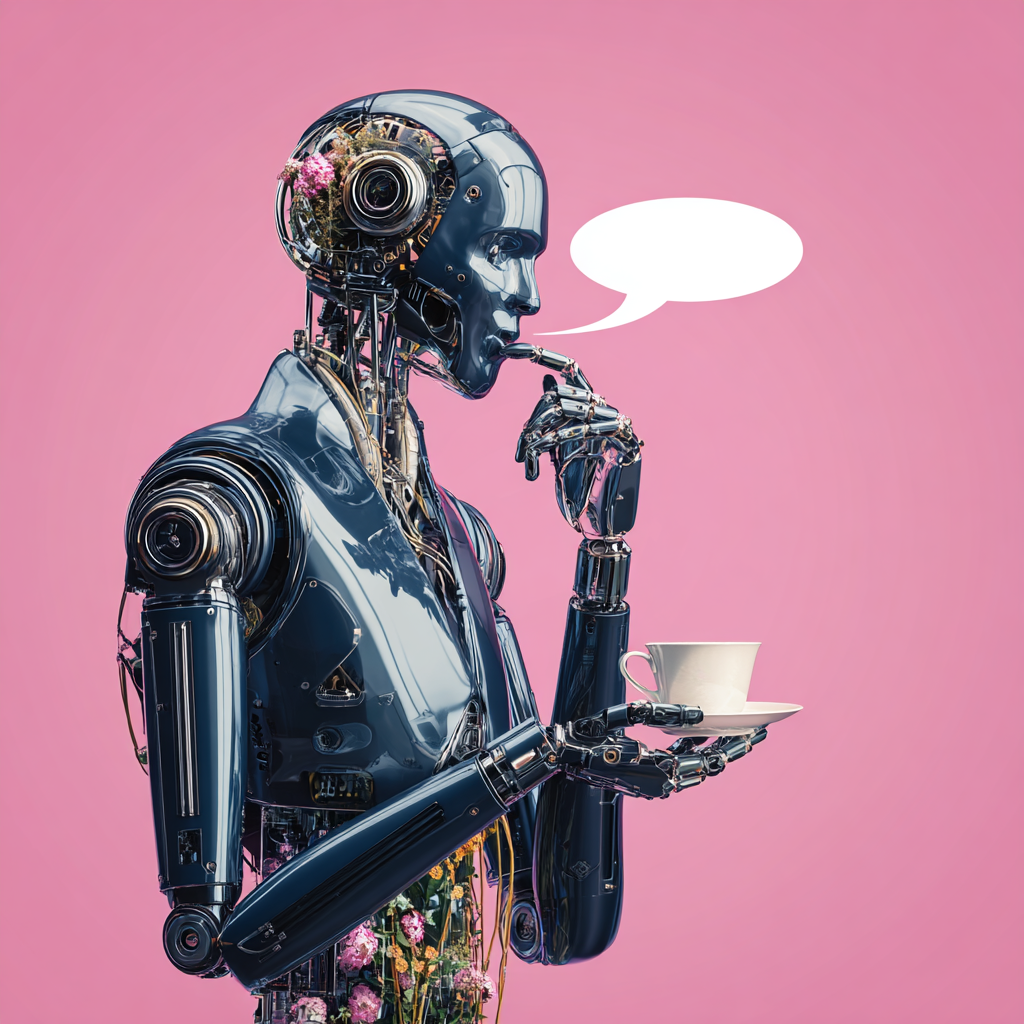
There was a time when running a business felt like spinning plates.
Emails piled up. Reports lagged behind reality. Customer requests stacked faster than teams could answer them. Every day felt reactive — putting out fires instead of building something stable.
Then something changed.
Not dramatically. Not loudly.
Processes started handling themselves.
Appointments scheduled automatically. Inventory adjusted before shortages happened. Marketing campaigns optimized without constant tinkering. Reports appeared before anyone asked for them.
Suddenly, work felt calmer.
This is the quiet promise of modern artificial intelligence — not flashy robots or science-fiction fantasies, but systems that make your business feel like it runs itself.
Not because humans disappeared.
Because humans finally stopped doing the things machines do better.
AI isn’t just a productivity tool anymore. It’s becoming the operating system beneath modern work.
—
From Constant Busyness to Intelligent Flow
For decades, “working hard” meant staying busy.
More emails. More spreadsheets. More meetings. More manual updates.
But busyness doesn’t equal progress. It often hides inefficiency.
AI flips that model.
Instead of asking, How do we do more work?
It asks, How do we remove unnecessary work altogether?
When intelligent systems take over repetitive decisions, something unexpected happens:
fewer interruptions
fewer manual fixes
fewer last-minute scrambles
fewer human errors
The result isn’t just speed.
It’s flow.
Work becomes smoother, more predictable, and less stressful.
And that changes everything.
—
What a “Self-Running” Business Actually Looks Like
imagegroup{“layout”:”carousel”,”aspectratio”:”1:1″,”query”:[“automated customer support chat interface clean design illustration”,”smart warehouse with robotic sorting systems”,”digital marketing dashboard showing real time analytics and optimization”,”calendar auto scheduling interface with tasks arranging themselves”],”numperquery”:1}
A self-running business doesn’t mean no people. It means fewer manual decisions.
Here’s what that looks like in practice.
Customer Support
Routine questions are answered instantly. Common problems are resolved automatically. Human staff step in only for complex or emotional issues.
Operations
Stock levels adjust based on forecasts. Orders trigger automatically. Bottlenecks are predicted before they happen.
Marketing
Campaigns adapt in real time. Messaging personalizes itself. Budgets shift toward what performs best without constant supervision.
Administration
Reports generate themselves. Meetings schedule automatically. Documents draft in seconds instead of hours.
Individually, these improvements seem small.
Together, they remove thousands of micro-tasks that used to drain entire teams.
—
The Real Superpower: Prediction
The most valuable thing AI offers isn’t automation.
It’s foresight.
Humans typically react after something happens.
Sales drop, so we investigate.
Inventory runs out, so we reorder.
Customers complain, so we fix it.
AI changes the timeline.
By analyzing patterns across massive amounts of data, it predicts outcomes before they occur.
This allows businesses to:
anticipate demand
detect risks early
spot opportunities faster
adjust strategies proactively
It’s like having a constant early-warning system.
And in business, early decisions are almost always cheaper and smarter than late ones.
—
Why Humans Still Matter More Than Ever
There’s a misconception that smarter machines make people less important.
In reality, they make people more valuable.
When AI handles repetitive work, humans are freed to focus on what only humans can do:
build trust
understand emotions
solve ambiguous problems
create original ideas
make ethical decisions
Think about it this way.
If your team no longer spends hours compiling reports, they can spend those hours improving strategy.
If they aren’t answering basic questions all day, they can deepen relationships with customers.
AI doesn’t shrink human roles.
It upgrades them.
The work becomes less mechanical and more meaningful.
—
How to Identify Your First AI Wins
imagegroup{“layout”:”carousel”,”aspectratio”:”1:1″,”query”:[“person mapping business workflow on whiteboard with sticky notes and arrows”,”simple flowchart illustrating task automation”,”laptop with clean analytics dashboard and charts”,”small team collaborating around desk with tablets planning strategy”],”numperquery”:1}
The biggest mistake companies make is trying to transform everything at once.
That usually leads to confusion and stalled projects.
Instead, look for quick wins.
Start by asking:
Where do we repeat the same steps every day?
Where do errors happen most often?
Where do employees feel drained or bored?
Those areas are perfect for automation.
Common starting points include:
data entry
scheduling
sorting emails
basic customer inquiries
weekly reporting
inventory tracking
Automate just one process.
Measure the time saved.
Then reinvest that time into higher-value work.
Momentum builds naturally.
—
The Psychological Benefit Nobody Talks About
There’s another benefit that rarely gets discussed: mental clarity.
Manual processes create hidden stress.
You constantly worry something might be missed.
You double-check everything.
You stay late “just in case.”
When reliable systems handle routine work, that anxiety fades.
Teams trust the process.
Work feels lighter.
Creativity increases because mental energy isn’t spent on busywork.
In many organizations, this emotional shift alone improves performance more than any technical upgrade.
Calm teams make better decisions.
Better decisions drive better results.
—
The Competitive Gap Is Growing
Here’s the uncomfortable truth.
Businesses that adopt AI steadily improve every month.
Those that don’t slowly fall behind.
Not because they’re less talented.
Because they’re slower.
Manual processes can’t compete with automated intelligence operating 24/7.
Over time, the gap compounds:
faster companies respond quicker
quicker responses win customers
more customers create more data
more data improves predictions
better predictions drive more growth
It’s a loop.
And once it starts, it’s hard to catch.
Early adoption isn’t about being trendy.
It’s about staying relevant.
—
The Future Feels Quieter, Not More Complicated
When people imagine the future of AI, they often picture complexity.
But the reality is surprisingly simple.
The future feels quieter.
Fewer alarms.
Fewer urgent emails.
Fewer last-minute scrambles.
Just steady, predictable progress.
The best AI doesn’t demand attention.
It disappears into the background and lets everything work better.
That’s what a self-running business truly means.
Not chaos powered by technology.
Calm powered by intelligence.
And the organizations that embrace that calm will shape the next era of work.
—
Frequently Asked Questions
What does a self-running business mean?
It describes a business where routine tasks and decisions are automated, allowing teams to focus on strategy and creativity.
Is AI only useful for large organizations?
No. Smaller teams often benefit more because automation saves a higher percentage of their time.
Do you need advanced technical skills to use AI?
Most modern systems are designed to be simple and user-friendly, requiring minimal training.
Will AI replace employees?
It typically removes repetitive tasks rather than jobs, allowing people to work on higher-value activities.
What tasks should be automated first?
Repetitive, rule-based processes such as scheduling, data entry, and basic customer support.
How does AI improve decision-making?
It analyzes large datasets quickly and provides insights or predictions humans might overlook.
Is AI expensive to implement?
Starting small is often affordable, and time savings usually offset costs quickly.
What is the biggest benefit of AI adoption?
Greater efficiency, fewer errors, and smarter decisions that create consistent, long-term growth.

Leave a Reply