
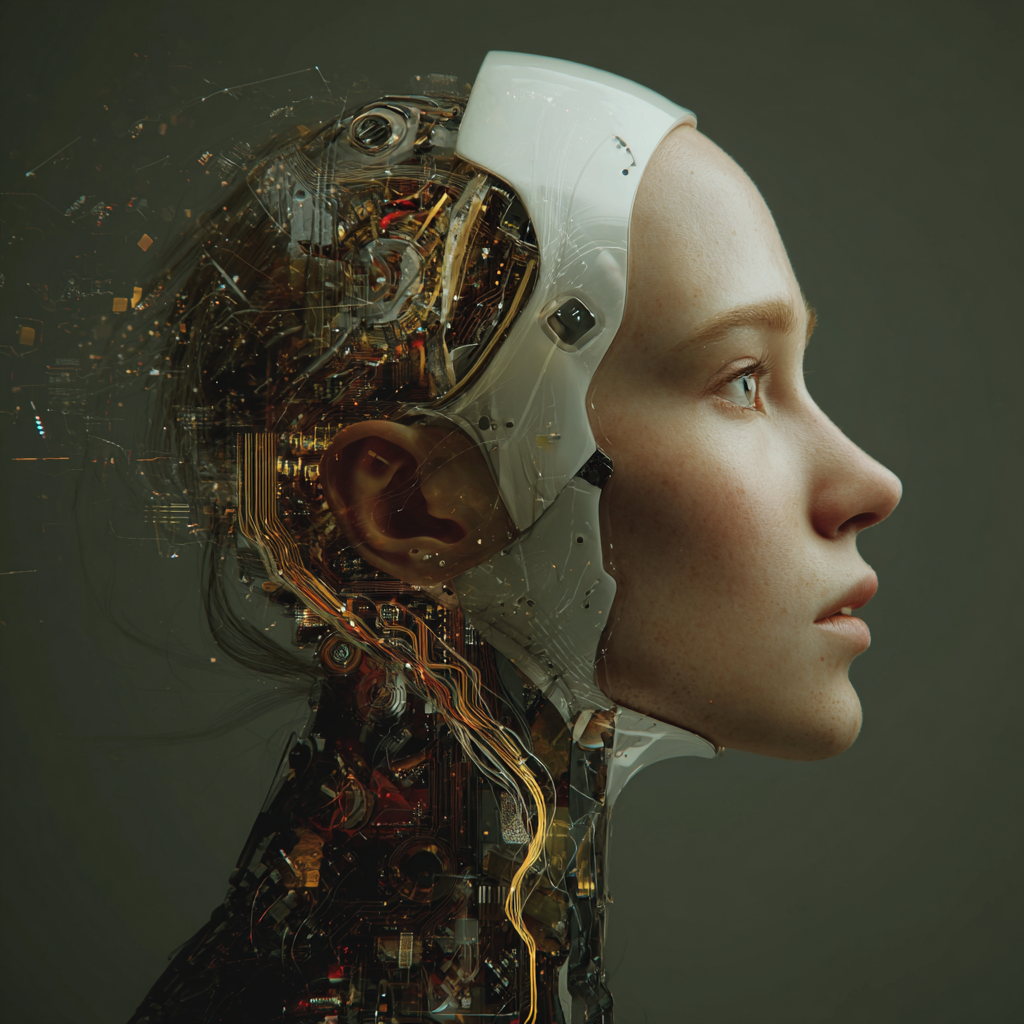
For years, productivity meant squeezing more into the day.
Wake up earlier.
Answer emails faster.
Multitask harder.
Stay later.
Somewhere along the way, “being busy” became the same thing as “being effective.”
But deep down, most professionals know the truth.
Busyness is often just noise.
Dozens of tiny tasks crowd the day — sorting messages, updating spreadsheets, scheduling meetings, compiling reports, repeating the same answers — leaving very little time for the work that actually moves things forward.
Artificial intelligence is changing that equation in a surprisingly simple way.
It’s not adding more tools.
It’s quietly removing work.
Task by task. Decision by decision.
Until the day feels lighter.
Until focus returns.
Until people finally have time to think again.
That’s the real promise of modern AI: not replacing humans, but redesigning how the workday feels.
—
The Hidden Drain on Productivity
Most inefficiency doesn’t come from big problems.
It comes from small ones.
Five minutes answering routine questions.
Ten minutes finding files.
Fifteen minutes formatting a report.
Twenty minutes scheduling a meeting.
Individually, these seem harmless.
Together, they swallow hours.
By the end of the week, you’ve lost entire days to tasks that require little creativity or judgment.
This is where AI makes its biggest impact.
Because machines don’t get tired of repetition.
They don’t lose focus.
They don’t make careless mistakes at the end of a long day.
What feels draining to a human is effortless to a system designed for pattern-based work.
So instead of forcing people to work faster, AI simply takes the repetitive load away.
—
AI’s New Role: The Silent Assistant
imagegroup{“layout”:”carousel”,”aspectratio”:”1:1″,”query”:[“chat style assistant responding automatically on computer screen”,”calendar auto scheduling meetings clean interface”,”email inbox organized into smart folders automatically”,”person smiling while reviewing concise AI generated report on tablet”],”numperquery”:1}
Forget the image of giant robots or complex machines.
Modern AI looks far more ordinary.
It behaves like an invisible assistant sitting beside you.
It:
sorts incoming messages
highlights urgent items
drafts summaries
suggests responses
schedules appointments
compiles reports
predicts outcomes
You still make the decisions.
But the preparation — the mental heavy lifting — is done for you.
Think of it like this.
Instead of starting every task from zero, you start halfway finished.
And that simple shift changes your entire day.
—
Why Decision Fatigue Is the Real Enemy
Most people assume productivity problems come from lack of time.
In reality, they often come from lack of mental energy.
Every small choice drains attention:
Which email first?
Which customer next?
Which number matters most?
Which task should I prioritize?
These micro-decisions add up.
By afternoon, your brain is tired — not because you’ve done meaningful work, but because you’ve sorted through clutter all day.
AI reduces this “decision fatigue” dramatically.
By filtering information and surfacing what matters, it removes dozens of unnecessary choices.
Instead of scanning 100 items, you review the 10 that actually require you.
That mental clarity leads to better thinking, fewer mistakes, and higher-quality work.
In many cases, it’s not about doing more.
It’s about deciding less.
—
Where AI Delivers the Fastest Wins
imagegroup{“layout”:”carousel”,”aspectratio”:”1:1″,”query”:[“customer support dashboard with automated replies and tickets resolving”,”warehouse inventory scanning devices with digital tracking”,”marketing analytics graphs showing audience segmentation”,”finance desk with predictive forecasting charts on screen”],”numperquery”:1}
Across industries, the same patterns appear again and again.
Communication
Routine inquiries are answered automatically, freeing teams for complex or personal conversations.
Scheduling
Calendars coordinate themselves, eliminating back-and-forth messages.
Reporting
Data transforms into clean summaries instantly rather than hours of manual formatting.
Operations
Demand predictions prevent shortages and overstocking before they occur.
Marketing
Campaigns adjust automatically based on performance, reducing guesswork.
Finance
Unusual transactions are flagged early, minimizing risk.
These improvements aren’t flashy.
But they are consistent.
And consistency is what drives long-term growth.
—
The Compounding Effect of Saved Minutes
Here’s something fascinating.
Saving ten minutes doesn’t feel life-changing.
But saving ten minutes fifty times a week?
That’s over eight hours.
An entire workday returned.
Now imagine saving two or three days every month.
That’s time for:
deeper strategy
skill development
relationship building
creative problem solving
The kinds of activities that actually grow a business.
AI doesn’t just make tasks faster.
It gives time back.
And time is the one resource you can never buy more of.
—
How to Introduce AI Without Overcomplicating Things
Many teams stall because they think AI requires a massive transformation.
It doesn’t.
The best results come from small, targeted changes.
Start simple.
Step 1: Track repetitive work
Notice which tasks feel mechanical or predictable.
Step 2: Automate one process
Choose the easiest win first — scheduling, reporting, or message sorting.
Step 3: Measure the benefit
Calculate time saved and errors reduced.
Step 4: Expand gradually
Add new improvements only after the first is working smoothly.
This approach builds confidence and avoids overwhelm.
AI adoption isn’t about big leaps.
It’s about steady improvements.
—
Why Humans Become More Valuable, Not Less
There’s a fear that smarter machines make people irrelevant.
But the opposite tends to happen.
When routine tasks disappear, human strengths stand out more clearly.
Things like:
empathy
storytelling
negotiation
creativity
leadership
These are qualities machines can’t replicate well.
And they’re exactly what customers and teams care about most.
By removing mechanical work, AI gives people room to focus on what makes them uniquely human.
Work becomes less robotic, not more.
—
The Future of Work Feels Lighter
The best technology often disappears into the background.
Electricity doesn’t demand attention. It just works.
AI is heading in the same direction.
In the near future, most tools will quietly handle routine tasks automatically.
You won’t think about “using AI.”
You’ll simply notice that:
fewer things slip through the cracks
fewer hours feel wasted
fewer days feel overwhelming
Work will feel smoother.
Calmer.
More intentional.
And that might be the biggest productivity upgrade of all.
Because when the noise fades, the important work finally gets the attention it deserves.
—
Frequently Asked Questions
What types of tasks are best for AI automation?
Repetitive, rule-based, or data-heavy tasks such as sorting emails, scheduling, and reporting.
Do small businesses benefit from AI?
Yes. Time savings have an even larger impact in smaller teams.
Is AI difficult to learn?
Most modern tools are designed for everyday users and require minimal training.
Will AI replace employees?
It usually removes repetitive tasks rather than entire roles, allowing people to focus on higher-value work.
How does AI reduce stress?
By handling routine decisions and organizing information, it lowers mental workload.
Is AI expensive to implement?
Starting small is often affordable, and the time saved quickly offsets costs.
Can AI improve accuracy?
Yes. Automated systems reduce human error and maintain consistent performance.
What is the biggest benefit of using AI daily?
More focus, better decisions, and reclaimed time that can be invested in meaningful work.

Leave a Reply