
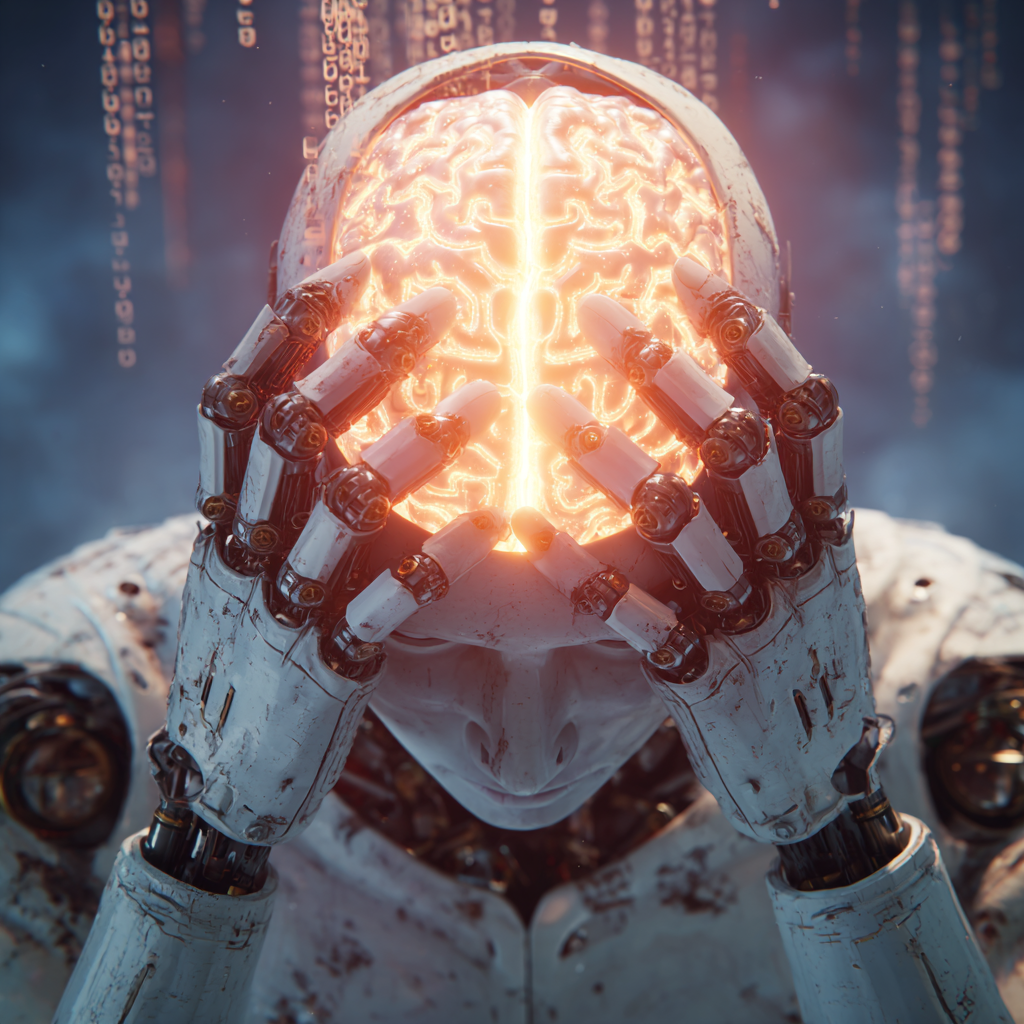
Not long ago, building a team meant one thing.
Hiring people.
More customers meant more staff.
More tasks meant more assistants.
More growth meant more payroll.
Headcount equaled progress.
It felt obvious. Logical. Necessary.
If the workload doubled, you doubled the team.
But something fundamental has shifted.
Today, companies are scaling faster than ever — without hiring anyone new.
Customer support volume goes up, but no new agents appear.
Reports are generated faster, but no analysts are added.
Operations expand, yet payroll barely changes.
So what’s happening?
They’re not hiring more humans.
They’re hiring AI agents.
Digital workers that operate 24/7, don’t take breaks, don’t make fatigue errors, and don’t require onboarding or benefits.
And in many cases, they’re outperforming traditional roles at a fraction of the cost.
This isn’t a futuristic theory.
It’s already happening quietly inside thousands of businesses.
Because before posting a job ad, smart companies now ask one simple question:
“Can an AI agent do this instead?”
More often than not, the answer is yes.
—
What Does It Actually Mean to “Hire” an AI Agent?
When people hear the phrase “AI agent,” they often imagine a simple chatbot or a basic piece of software.
That’s outdated thinking.
Modern AI agents behave more like junior employees.
They can:
read incoming messages
interpret instructions
make rule-based decisions
follow multi-step processes
update systems
generate documents
process requests
operate independently
They don’t just assist work.
They complete it.
Think of them as digital team members who never sleep.
You assign a workflow once.
They execute it endlessly.
No reminders.
No follow-ups.
No supervision.
If a human could follow a checklist to complete a task, an AI agent can usually follow that checklist faster and more consistently.
And that’s exactly why businesses are turning to them first.
—
Why Hiring Humans Isn’t Always the Smartest First Move
Let’s be honest.
Hiring people is complicated and expensive.
There’s recruiting time.
Interviews.
Training.
Management.
Salaries.
Benefits.
Turnover.
Limited working hours.
Even the best employee still has constraints.
Now compare that with an AI agent.
It:
works 24/7
scales instantly
costs far less
never gets tired
doesn’t make repetitive mistakes
doesn’t quit
From a business standpoint, the difference is dramatic.
If an AI agent can perform 80% of a role’s repetitive work at 20% of the cost, the decision isn’t emotional.
It’s mathematical.
Efficiency wins.
And companies that ignore efficiency eventually fall behind.
—
The Tasks AI Agents Replace First
There’s an important nuance here.
AI agents rarely replace entire professions.
They replace repetitive task clusters inside those professions.
Specifically tasks that are:
predictable
rule-based
high volume
structured
low creativity
Examples include:
answering routine customer questions
sorting emails
scheduling appointments
processing invoices
generating weekly reports
updating records
tracking orders
validating forms
simple research
Notice something?
These aren’t deeply human tasks.
They’re procedural.
They require consistency, not creativity.
And consistency is exactly what machines excel at.
So what’s disappearing isn’t human brilliance.
It’s digital busywork.
—
The Uncomfortable Truth About Most Office Work
Here’s something most people quietly know but rarely say out loud.
A surprising amount of office work is mechanical.
Copy.
Paste.
Format.
Send.
Repeat.
Necessary, yes.
But hardly meaningful.
For years, humans handled these tasks simply because there was no alternative.
Now there is.
AI agents aren’t stealing purpose.
They’re removing the parts of work that already feel robotic.
In many cases, they’re eliminating the most draining parts of someone’s day.
And that’s not necessarily a loss.
—
Why This Still Feels Threatening
Even when automation improves efficiency, it feels personal.
Because people tie their identity to their tasks.
If a machine can do what you do, it feels like you’re replaceable.
But here’s the critical shift in perspective:
Tasks are replaceable.
Skills are not.
AI agents are excellent at execution.
They’re terrible at interpretation.
They don’t:
build trust
handle complex emotions
negotiate
lead teams
think creatively
make ethical decisions
Humans do.
And those abilities are becoming more valuable, not less.
Because as automation increases, human judgment becomes the differentiator.
—
How Smart Companies Actually Use AI
The best businesses don’t blindly replace humans.
They redesign work.
They let AI agents handle:
repetitive admin
routine processing
structured communication
And they let humans handle:
strategy
leadership
relationships
innovation
decision-making
Instead of eliminating staff, they elevate staff.
Less time on boring tasks.
More time on meaningful work.
Ironically, this often improves job satisfaction.
Because very few people dream of spending their careers answering the same question 500 times a day.
They want to solve problems.
Create ideas.
Make an impact.
AI agents free them to do exactly that.
—
If You’re an Employee, Here’s the Real Strategy
The future isn’t about competing with AI.
It’s about collaborating with it.
Trying to outperform machines at repetition is a losing game.
But excelling at uniquely human skills is unbeatable.
Focus on:
communication
creativity
critical thinking
leadership
empathy
problem-solving
And learn how to manage AI tools effectively.
The people who thrive won’t be the fastest typists.
They’ll be the ones directing digital workers.
Operators get automated.
Supervisors stay essential.
So become the supervisor.
—
The New Definition of “Hiring”
Hiring used to mean adding another person.
Today, it often means adding capability.
Sometimes that capability is human.
Sometimes it’s digital.
Often it’s both.
The strongest teams are hybrid.
Humans for thinking.
AI for execution.
Humans for relationships.
AI for scale.
Humans for creativity.
AI for consistency.
It’s not humans versus machines.
It’s humans plus machines.
And that combination is incredibly powerful.
—
A Healthier Way to Look at It
“Hire AI agents instead of humans” sounds harsh at first.
But look closer.
What’s being replaced isn’t empathy or creativity.
It’s repetition.
The parts of work that already feel robotic.
If those disappear, what remains is what makes work meaningful.
Leading.
Creating.
Solving.
Connecting.
Deeply human things.
So maybe the smartest hire isn’t another person right away.
Maybe it’s a digital teammate that frees your people to do their best work.
Because sometimes, the best employee you’ll ever add isn’t human at all.
It’s the one that never sleeps.
—
Frequently Asked Questions
What is an AI agent?
An AI agent is a digital system that can independently complete tasks and workflows based on instructions and data.
Are AI agents replacing all human workers?
No. They mainly automate repetitive tasks rather than eliminating entire roles.
Why are businesses choosing AI agents first?
They reduce costs, operate continuously, and provide consistent performance.
Which tasks are most likely to be automated?
Routine, rule-based, and high-volume tasks.
Does automation mean fewer jobs overall?
Not necessarily. Often it shifts humans into higher-value, strategic roles.
How can employees stay relevant?
Develop creative, communication, and leadership skills and learn to work alongside AI tools.
Are AI agents better than humans?
They’re better at repetition and speed but weaker at empathy, creativity, and complex judgment.
What’s the best way to think about AI agents?
View them as digital teammates that handle mechanical work so humans can focus on meaningful contributions.

Leave a Reply