
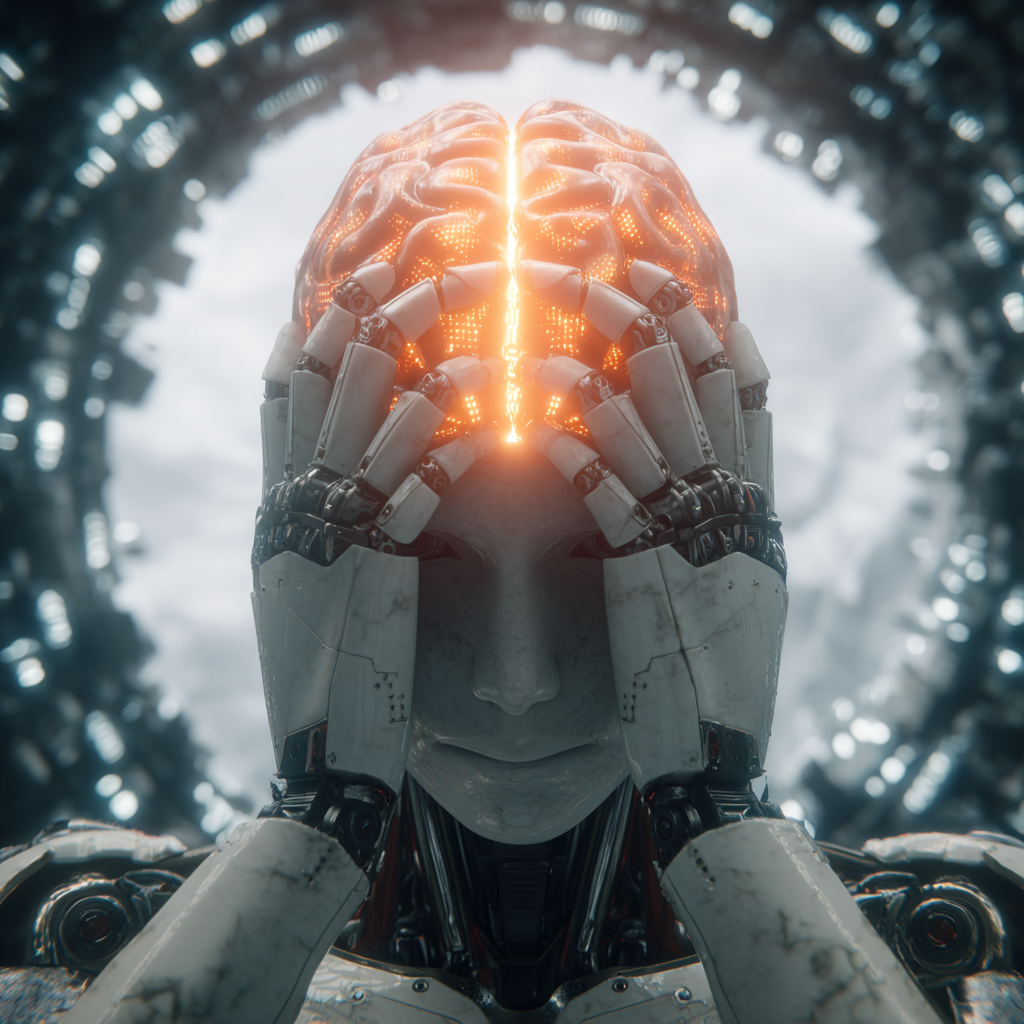
There’s a common belief that productivity comes from effort.
Work harder.
Stay later.
Answer faster.
Push through.
If you want more output, you add more hours.
If you want more results, you add more pressure.
It sounds logical.
But it rarely works.
Because most people aren’t short on effort.
They’re drowning in small tasks.
Endless emails.
Routine reports.
Data entry.
Scheduling.
Formatting.
Searching for information.
By the time the “real work” begins, the day is half gone.
So even talented teams end up feeling stuck. Busy but not impactful. Active but not advancing.
This is where artificial intelligence changes everything.
Not in a dramatic, science-fiction way.
But quietly.
Almost invisibly.
It removes the background noise of work.
And when that noise disappears, something remarkable happens.
Progress accelerates.
Deadlines shrink.
Stress drops.
And suddenly, the same team seems twice as productive.
No extra hours.
No extra hires.
Just fewer distractions.
That’s the true power of embracing AI.
Not speed.
Not hype.
But leverage.
—
The Hidden Weight Slowing Everyone Down
Most teams assume their bottleneck is complexity.
But it’s actually repetition.
Take a typical workday and break it apart.
How much time is spent on:
writing similar emails
updating the same spreadsheets
preparing recurring reports
organizing documents
copying information between systems
answering common questions
chasing small admin tasks
Each one seems minor.
Five minutes here. Ten minutes there.
But stack them together and you lose hours.
By Friday, you’ve lost days.
And none of that time created new value.
It simply maintained existing systems.
Maintenance is necessary.
But it shouldn’t dominate your day.
AI changes this equation.
Because maintenance is exactly what machines are best at.
—
Why AI Is a Multiplier, Not Just a Tool
Many people think of AI as a helper.
Something that makes tasks slightly faster.
But that mindset misses the bigger opportunity.
AI isn’t a faster hammer.
It’s an extra set of hands.
In fact, it’s dozens of them.
Here’s the difference.
If a tool saves you 20% of your time, you get incremental improvement.
If AI completely automates a task, you get exponential improvement.
The task disappears entirely.
Forever.
That’s not saving time.
That’s reclaiming it.
Imagine:
reports created automatically
meetings summarized instantly
customer questions answered without manual effort
data organized without touching it
drafts written before you even start
Those aren’t minor efficiencies.
They’re entire chunks of your day returned to you.
And when multiplied across a team, the gains are enormous.
—
Where AI Delivers Immediate Productivity Wins
AI excels in environments where work is repetitive, predictable, and structured.
Which, if we’re honest, describes a large portion of modern business.
These areas typically see the fastest gains:
Routine Communication
Drafting standard emails, replies, or updates.
Reporting
Creating weekly or monthly summaries without manual compilation.
Data Handling
Sorting, categorizing, and extracting insights automatically.
Scheduling
Coordinating calendars and appointments without endless back-and-forth.
Documentation
Summarizing long content into usable information quickly.
None of these tasks require deep creativity.
They require consistency.
And machines thrive on consistency.
When AI handles this layer, humans can focus on thinking instead of processing.
—
The Shift From Reactive Work to Proactive Work
Here’s what really changes when teams adopt AI.
They stop reacting all day.
Without automation, most work feels like firefighting.
Answer this. Fix that. Respond here. Update there.
You’re constantly chasing small tasks.
There’s no time to plan.
No time to think deeply.
No time to innovate.
AI removes the small fires.
So you finally get space.
Space to improve systems.
Space to design smarter strategies.
Space to create something new.
And that’s when real productivity shows up.
Because proactive work creates progress.
Reactive work just maintains status quo.
—
How AI Makes Small Teams Feel Big
One of the most surprising effects of AI adoption is how dramatically it amplifies small teams.
A five-person team supported by AI often produces the output of ten or fifteen people working manually.
Not because they’re working harder.
But because they’re not wasting time.
Each person spends their energy on:
decision-making
problem-solving
creative work
high-value conversations
Instead of admin.
It’s leverage in its purest form.
Machines handle volume.
Humans handle value.
And when those roles are clear, performance skyrockets.
—
The Mental Energy Factor Most People Miss
Productivity isn’t just about time.
It’s about energy.
Repetitive tasks drain focus.
Even simple ones.
Switching contexts constantly wears down attention.
By the afternoon, your brain feels tired even though you haven’t done anything intellectually challenging.
AI reduces that fatigue.
When routine tasks disappear, your day feels lighter.
You stay focused longer.
You think more clearly.
You make better decisions.
And better decisions always beat faster execution.
So the productivity gain isn’t just quantitative.
It’s qualitative.
The work improves.
Not just the speed.
—
A Practical Way to Start Seeing Results
The biggest mistake teams make is trying to transform everything overnight.
That leads to overwhelm.
Instead, think small and strategic.
Start with the most repetitive pain points.
Use this simple approach:
Track your tasks for a few days.
Identify what repeats constantly.
Automate one process completely.
Use the freed time for higher-value work.
Repeat weekly.
Each improvement compounds.
Within a few months, the difference feels dramatic.
Days that used to feel rushed suddenly feel manageable.
Projects that once took weeks finish faster.
And stress drops naturally.
Because you’re no longer fighting your workload.
You’re redesigning it.
—
Why This Isn’t About Replacing People
Some worry that productivity gains from AI mean fewer jobs.
But that’s not how it usually plays out.
In most cases, AI doesn’t eliminate roles.
It upgrades them.
It removes the mechanical parts of work.
And leaves the meaningful parts behind.
Humans become:
strategists
leaders
creators
problem-solvers
Not operators.
Not data movers.
Not process repeaters.
And that shift makes work more valuable and more satisfying.
Which benefits everyone.
—
The Future of High Performance
For decades, we tried to improve productivity by squeezing more out of people.
More meetings. More tools. More pressure.
But humans have limits.
AI doesn’t.
The future isn’t about working faster.
It’s about working smarter.
Let machines handle repetition.
Let humans handle imagination.
That partnership is the real breakthrough.
Because when the busywork disappears, potential finally has room to grow.
And that’s where true productivity lives.
—
Frequently Asked Questions
What does embracing AI mean for productivity?
It means using intelligent systems to automate repetitive tasks so teams can focus on higher-value work.
Does AI only save time?
No. It often improves quality, focus, and overall output, not just speed.
Which tasks should be automated first?
Routine, rule-based, and repetitive tasks like reporting, scheduling, and standard communication.
Can small teams benefit from AI?
Yes. Smaller teams often see the largest gains because every saved hour has a bigger impact.
Is AI difficult to adopt?
Many tools are simple to implement and require minimal technical knowledge.
Will AI replace human roles?
It usually changes roles rather than removes them, shifting people toward more strategic work.
How quickly do productivity improvements appear?
Many teams notice meaningful gains within days or weeks of automating repetitive tasks.
What’s the biggest mistake when adopting AI?
Trying to automate everything at once instead of starting small and building gradually.

Leave a Reply