
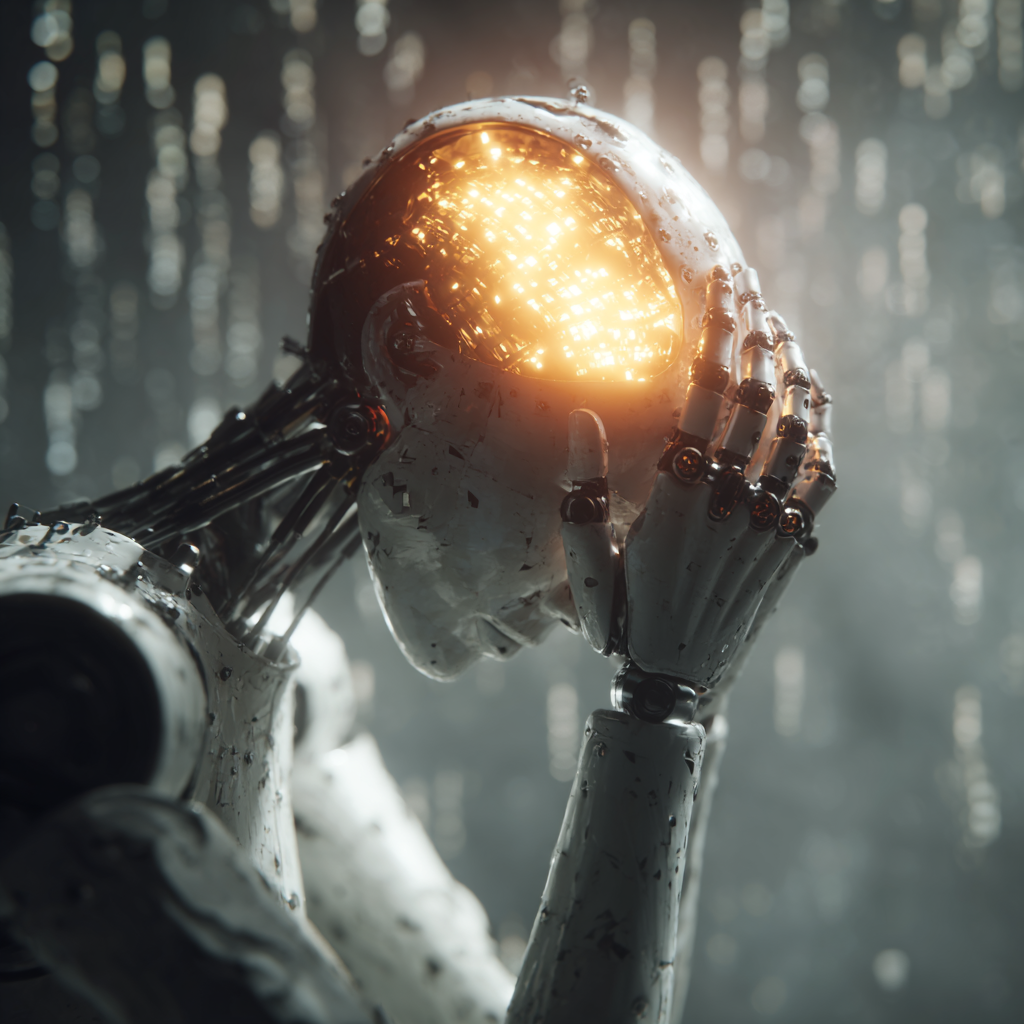
Once in a while, history accelerates.
Not gradually.
Not predictably.
But suddenly.
For decades, progress feels incremental — slightly better devices, slightly faster systems, slightly smarter software.
Then something arrives that doesn’t just improve life.
It redefines what humans are capable of.
The steam engine reshaped labor.
Electricity transformed cities.
The internet rewired communication and commerce.
And now we’re living through the next great inflection point.
Artificial intelligence.
Not just another app.
Not just another digital upgrade.
But the first technology that assists human thinking itself.
That’s why this moment is different.
For the first time, machines aren’t only extending our strength or speed.
They’re extending our intelligence.
And that is a once-in-a-century shift.
—
From Muscle Power to Mind Power
If you trace the history of technology, a clear pattern appears.
For centuries, innovation focused on physical power.
Tools helped us lift more, move faster, and build bigger.
A plow amplified muscle.
A train amplified movement.
A factory amplified output.
Even computers, despite their sophistication, mainly amplified calculation.
They processed numbers quickly, but the thinking still came from humans.
We planned. We decided. We interpreted.
AI changes that relationship.
Now machines can:
analyze information
recognize patterns
summarize knowledge
generate ideas
predict outcomes
assist decisions
Not perfectly. Not independently.
But meaningfully.
That’s the leap.
We’re no longer just building stronger tools.
We’re building thinking tools.
And thinking tools multiply everything else.
—
Why This Breakthrough Is Easy to Underestimate
At first glance, AI doesn’t look revolutionary.
It drafts emails.
It summarizes meetings.
It answers questions.
Helpful? Yes.
Historic? It doesn’t feel like it.
But neither did electricity at first.
Early electricity simply replaced candles.
No one immediately imagined it powering factories, trains, or entire cities.
The internet began with simple websites and emails.
Few predicted global commerce, streaming media, and digital economies.
Breakthroughs often arrive quietly.
They look small at first.
Then they spread into everything.
AI is following the same path.
Today it saves minutes.
Tomorrow it reshapes industries.
—
When Technology Becomes a Partner
Traditional tools wait for instructions.
You click.
You type.
You command.
They obey.
AI behaves differently.
It collaborates.
It suggests.
It assists.
Instead of acting like a hammer, it behaves more like a teammate.
You provide direction.
It helps execute the thinking.
This changes the nature of work itself.
You’re no longer doing everything manually.
You’re guiding systems that multiply your output.
It’s like having an invisible assistant who never sleeps, never forgets, and can process information instantly.
That’s not convenience.
That’s leverage.
And leverage is what separates small progress from exponential growth.
—
The Productivity Shockwave
Here’s where the impact becomes real.
Consider how much of your day is spent on repetitive mental work:
Answering routine messages.
Formatting documents.
Searching for information.
Creating similar reports.
Copying data between systems.
Updating spreadsheets.
These tasks aren’t difficult.
But they’re constant.
They break focus.
They drain energy.
And they consume hours.
AI removes many of these tasks entirely.
Not faster.
Gone.
When routine work disappears, two things happen.
You gain time.
And you regain attention.
Attention is the real productivity driver.
When your mind isn’t fragmented, you think better.
Solve problems faster.
Make smarter decisions.
This is why people who embrace AI often feel like their days suddenly open up.
Not because they’re rushing.
Because they’re uninterrupted.
—
The Economic Ripple Effect
Now zoom out.
Imagine millions of people each saving just one or two hours per day.
Across entire industries.
Across entire countries.
That’s millions of extra hours of creativity, strategy, and innovation.
The result isn’t just personal efficiency.
It’s economic acceleration.
More ideas launched.
More products built.
More businesses created.
More discoveries made.
This is how historic technologies reshape civilizations.
Not through one big change.
Through countless small improvements happening everywhere at once.
AI is already triggering that ripple.
And it’s only just beginning.
—
How AI Levels the Playing Field
For most of history, scale belonged to those with resources.
More staff.
More money.
More time.
But AI changes that equation.
Now a small team supported by intelligent systems can operate like a much larger organization.
A handful of people can manage what once required dozens.
Automation handles volume.
Humans focus on strategy.
This democratizes power.
It gives individuals and small teams capabilities that used to belong only to massive corporations.
That’s rare in technological history.
And incredibly empowering.
—
The Real Skill of the AI Era
Whenever a major shift happens, one trait determines success.
Adaptability.
Not expertise.
Not size.
Not even experience.
Adaptability.
Those who embraced electricity early thrived.
Those who adopted the internet early grew fastest.
The same will be true for AI.
You don’t need to become a technical expert.
You simply need to integrate it naturally into how you work.
Use it to remove friction.
Automate repetitive tasks.
Support decision-making.
Free your attention for what matters.
Small improvements compound quickly.
And compounding is where transformation lives.
—
Addressing the Fear
Every technological leap sparks anxiety.
People worry about jobs.
About relevance.
About being replaced.
These concerns are understandable.
But history shows something important.
Technology doesn’t eliminate human value.
It elevates it.
When machines take over repetitive tasks, humans move toward higher-value skills.
Creativity.
Empathy.
Leadership.
Problem-solving.
Strategy.
The things machines struggle with.
AI doesn’t compete with these strengths.
It highlights them.
It removes the noise so you can focus on what truly matters.
—
A Rare Moment in Time
Most generations experience gradual progress.
A little better each year.
But occasionally, a generation witnesses a true leap.
A moment when the rules change.
When one person can do the work of many.
When ideas travel instantly.
When capability expands dramatically.
We are living in one of those moments.
Artificial intelligence isn’t just another upgrade.
It’s a foundational shift in how humans think, work, and create.
A once-in-a-century breakthrough.
The kind people look back on and say, “That’s when everything changed.”
And like every breakthrough before it, those who embrace it early won’t just keep up.
They’ll help shape the future itself.
—
Frequently Asked Questions
Why is AI called a once-in-a-century breakthrough?
Because it assists with cognitive tasks, fundamentally changing how humans think and work, not just how they perform physical tasks.
Is AI just another software improvement?
No. It’s becoming foundational infrastructure that influences nearly every industry.
How does AI improve productivity?
By automating repetitive tasks, processing information quickly, and supporting smarter decisions.
Will AI replace most jobs?
It typically changes roles rather than eliminates them, shifting people toward creative and strategic work.
Do you need technical skills to use AI effectively?
Many tools are simple and accessible, requiring little technical knowledge.
Who benefits most from AI adoption?
Individuals and organizations that adapt early and integrate it into daily workflows.
Is AI only useful for large companies?
No. Small teams often gain the biggest advantages because automation multiplies limited resources.
What’s the biggest risk of ignoring AI?
Falling behind competitors who use it to work faster, smarter, and more efficiently.

Leave a Reply