
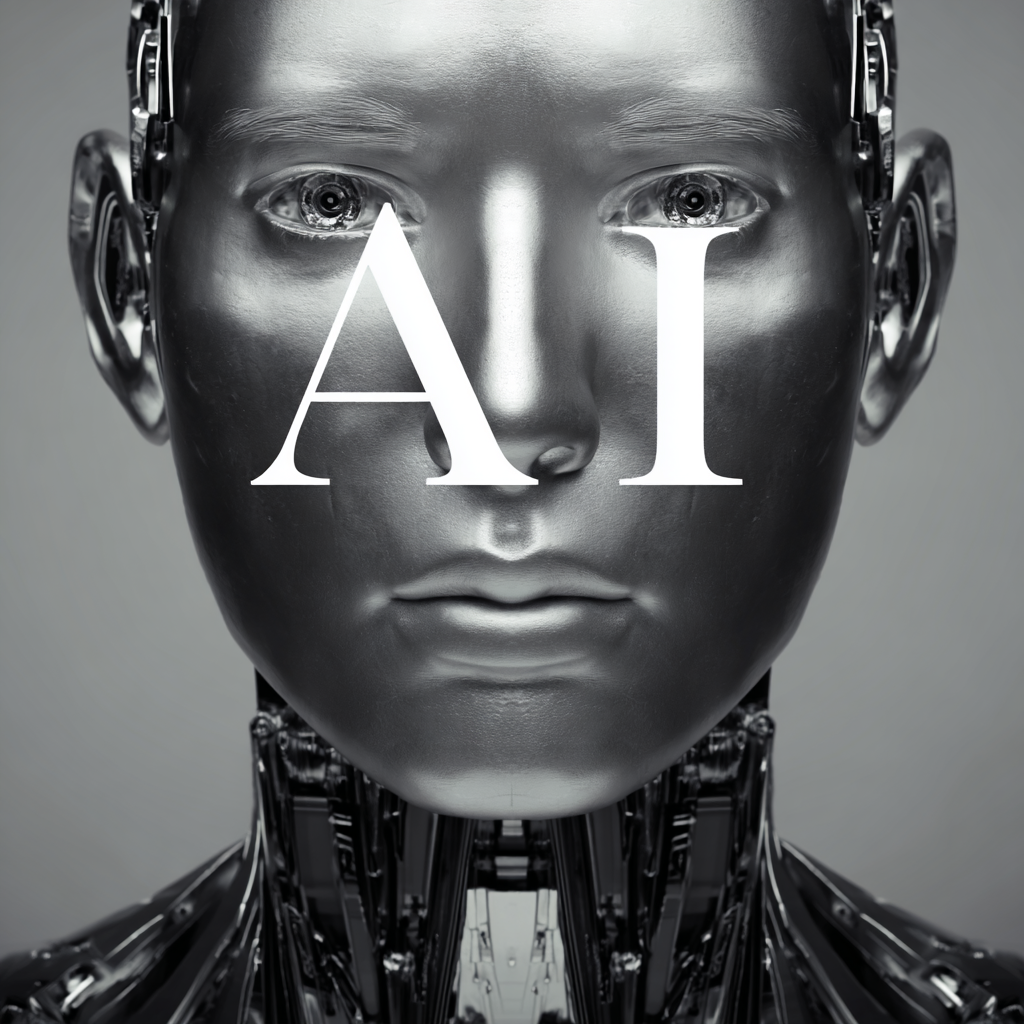
Most technological change feels gradual.
A faster phone.
A smoother app.
A quicker download.
Small upgrades that make life slightly more convenient but rarely transformative.
Then, once in a generation — sometimes once in a century — something different happens.
A breakthrough appears that doesn’t just improve the world.
It rewrites the rules of what humans can do.
The steam engine mechanized labor.
Electricity extended productivity into the night.
The internet collapsed distance and connected the globe.
Artificial intelligence belongs in that same category.
Not a feature.
Not a trend.
Not a passing innovation.
But a fundamental shift in how work, creativity, and decision-making happen.
Because for the first time in history, machines aren’t just helping us move faster or lift heavier.
They’re helping us think.
And when thinking scales, everything scales.
That’s why AI isn’t just another technological wave.
It’s the once-in-a-century breakthrough that defines an era.
—
The First Technology That Amplifies Thought
Look back at every major invention before now.
They all enhanced physical capability.
A tractor replaced muscle.
A plane replaced distance.
A factory replaced manual repetition.
Even computers, as powerful as they are, primarily sped up calculations and storage.
Humans still had to analyze, interpret, and decide.
Artificial intelligence crosses a new boundary.
It assists with mental work itself.
It can:
analyze vast amounts of data
detect patterns humans might miss
summarize complex information
generate ideas and drafts
predict outcomes
automate routine decisions
This is unprecedented.
We’ve built a tool that doesn’t just extend the body.
It extends cognition.
That’s not an upgrade.
That’s a leap.
—
Why Most People Underestimate It
At first glance, AI feels ordinary.
It helps write emails.
It summarizes meetings.
It answers questions.
Useful, yes.
Revolutionary, not obviously.
But this is exactly how historic breakthroughs begin.
Electricity started as a novelty light source.
The internet started as a slow information network.
Neither seemed world-changing at first.
Then they spread.
Into every industry.
Into every home.
Until they became invisible infrastructure — something you simply couldn’t function without.
AI is following the same path.
Today, it feels like assistance.
Tomorrow, it will be essential.
—
From Tools to Collaborators
Traditional software waits for commands.
You tell it exactly what to do.
AI behaves differently.
It collaborates.
It suggests.
It anticipates.
It assists.
Instead of acting like a calculator, it acts more like a co-worker.
A silent partner that handles repetitive tasks, analyzes information instantly, and offers intelligent support.
This changes how work feels.
You’re no longer doing everything manually.
You’re guiding a system that multiplies your output.
One person can now perform the work that once required several.
Not because they’re working harder.
But because they’re working with leverage.
And leverage is what separates small progress from exponential growth.
—
The Productivity Surge Hiding in Plain Sight
Here’s where AI’s impact becomes tangible.
Consider how much of a normal day is spent on low-value tasks:
Replying to routine messages.
Formatting documents.
Searching for information.
Updating spreadsheets.
Creating similar reports.
Rewriting the same content again and again.
These tasks aren’t complex.
But they consume enormous time and attention.
And attention is limited.
AI removes many of these tasks completely.
Not faster.
Gone.
When this maintenance layer disappears, two things happen immediately:
You gain hours.
You regain focus.
Focus is where real productivity lives.
Long, uninterrupted stretches of thought produce breakthroughs.
Constant interruptions produce exhaustion.
AI protects your focus.
And that protection is often worth more than the time saved.
—
The Compounding Effect That Changes Everything
What makes AI historic isn’t one dramatic improvement.
It’s the compounding effect of many small ones.
Imagine saving just one hour per day.
That’s five hours per week.
Twenty hours per month.
More than two full workweeks per year.
Now multiply that across millions of people.
Suddenly, entire economies have more creative time.
More strategic thinking.
More innovation.
This is how breakthroughs reshape society.
Not through one massive shift.
But through countless small efficiencies stacking on top of each other.
The impact compounds quietly.
Then suddenly, dramatically.
—
Why Every Industry Will Be Affected
Some technologies are specialized.
They only change certain sectors.
AI is universal.
Every field relies on thinking, analysis, and decision-making.
Which means every field can benefit.
Healthcare gains faster diagnostics.
Education gains personalized learning.
Finance gains smarter risk analysis.
Creative industries gain rapid idea generation.
Operations gain automation and optimization.
AI isn’t confined to one corner of the economy.
It touches everything.
That’s a hallmark of century-level breakthroughs.
They don’t improve one area.
They transform all of them.
—
Leveling the Playing Field
There’s another historic aspect to this moment.
AI reduces the advantage of size.
In the past, large organizations dominated because they had more people and more resources.
Now small teams can achieve similar output with intelligent systems.
A handful of individuals can manage workloads that once required entire departments.
This creates opportunity.
Entrepreneurs can compete with established players.
Small teams can move faster than giants.
Creativity beats scale.
That democratization of power is rare — and powerful.
It opens doors that were previously locked.
—
The Human Advantage Doesn’t Disappear — It Grows
Whenever technology advances, fear follows.
People worry about replacement.
About losing relevance.
About machines taking over.
But history tells a different story.
Technology rarely erases human value.
It shifts it.
When machines take over repetitive tasks, humans focus on higher-level skills.
Creativity.
Empathy.
Leadership.
Judgment.
Strategy.
The qualities that make us uniquely human.
AI doesn’t compete with these strengths.
It highlights them.
It removes the noise so we can concentrate on what matters most.
In many ways, it makes human work more meaningful, not less.
—
The Skill That Matters Most Now
During every major technological shift, one trait predicts success.
Not intelligence.
Not resources.
Adaptability.
Those who adapt early gain the most.
Those who resist get left behind.
The same pattern is unfolding today.
You don’t need to master complex systems.
You simply need to stay curious.
Experiment.
Integrate AI naturally into your workflow.
Automate small tasks.
Reinvest saved time into higher-value work.
Small changes compound.
Momentum builds.
And suddenly, you’re operating at a completely different level.
—
A Moment Future Generations Will Study
Most years pass without historic significance.
But every so often, a generation witnesses a true inflection point.
A moment when the ceiling of human capability rises dramatically.
We are living through one of those moments.
Artificial intelligence isn’t just another tool.
It’s a foundational upgrade to how humans think and create.
A once-in-a-century breakthrough.
The kind people look back on decades later and say, “That’s when everything changed.”
And for those who embrace it early, the benefits won’t just be incremental.
They’ll be transformative.
—
Frequently Asked Questions
Why is AI considered a once-in-a-century breakthrough?
Because it assists with cognitive tasks, fundamentally changing how humans think and work, not just how they perform physical labor.
Is AI just another software trend?
No. It’s becoming foundational infrastructure that will influence nearly every industry and workflow.
How does AI improve productivity?
By automating repetitive tasks, analyzing information quickly, and supporting faster decision-making.
Will AI replace most jobs?
It typically changes roles rather than eliminating them, shifting people toward creative and strategic work.
Do you need technical expertise to use AI?
Many tools are accessible and designed for everyday users with minimal training.
Which industries benefit most from AI?
Nearly all industries benefit because thinking, analysis, and decision-making exist everywhere.
How quickly are we likely to see widespread change?
Adoption is already accelerating, and many sectors are seeing significant impact within just a few years.
What’s the biggest risk of ignoring AI?
Falling behind competitors who use it to work faster, smarter, and more efficiently.

Leave a Reply