
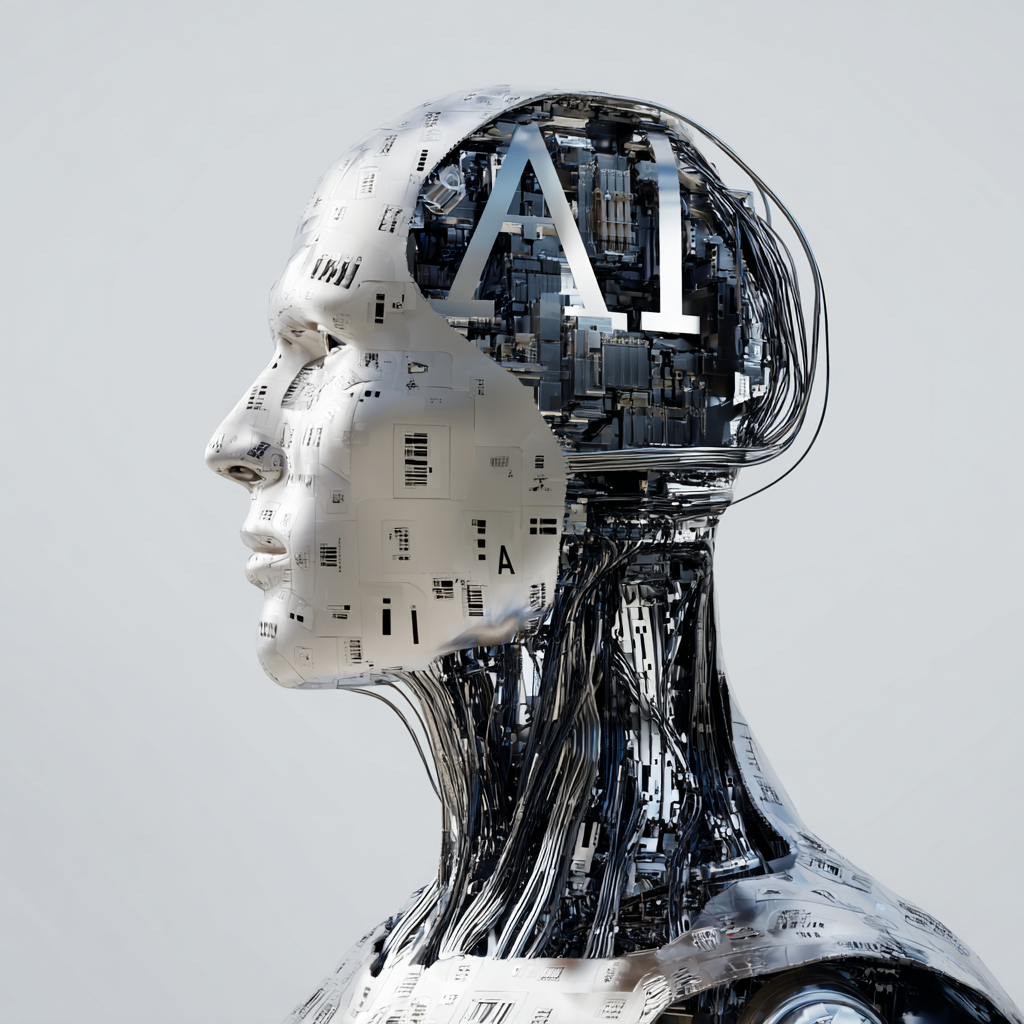
Most years feel like upgrades.
A faster device.
A better app.
A slightly smarter system.
Life improves in small, incremental ways.
Then, rarely — maybe once in a generation, sometimes once in a century — something different happens.
A technology appears that doesn’t just make life easier.
It changes what’s possible.
The steam engine didn’t just move goods faster. It launched the industrial age.
Electricity didn’t just power homes. It transformed cities and extended human productivity around the clock.
The internet didn’t just connect computers. It reshaped communication, commerce, and culture worldwide.
Now we’re living through another one of those moments.
Artificial intelligence.
Not another gadget.
Not another software update.
But the first technology that meaningfully assists human thinking itself.
That’s why this isn’t a normal tech cycle.
It’s a once-in-a-century breakthrough.
Because when thinking scales, everything scales.
—
From Tools That Extend Muscle to Tools That Extend Mind
For thousands of years, technology has followed one simple goal: amplify physical effort.
Need to plow faster? Build better tools.
Need to move goods farther? Build engines.
Need to lift heavier loads? Build machines.
Even computers, for all their complexity, mainly accelerated calculation and storage.
They processed information quickly, but they didn’t interpret it for you.
You still had to think.
Plan.
Decide.
Create.
Artificial intelligence crosses that boundary.
It assists with cognition.
It can:
analyze large amounts of data
recognize patterns instantly
summarize complex information
generate ideas or drafts
automate repetitive decision processes
surface insights you might otherwise miss
For the first time, machines don’t just help your hands.
They help your mind.
That’s historically unprecedented.
And that’s why the impact is so large.
—
Why It Doesn’t Feel Historic Yet
Here’s the strange thing about revolutions.
They rarely look revolutionary at first.
Electricity began as novelty lighting.
The internet began as simple web pages and email.
Both seemed limited in their early days.
Artificial intelligence feels similar right now.
It writes messages.
Summarizes meetings.
Suggests improvements.
Helpful, but not dramatic.
But that’s exactly how massive shifts begin.
Small conveniences spread quietly.
Workflows adjust.
Habits change.
Then suddenly the technology is everywhere.
Invisible.
Essential.
That’s when you realize it wasn’t just a tool.
It was infrastructure.
AI is moving rapidly into that category.
—
When Technology Becomes a Teammate
Traditional tools are passive.
You tell them what to do.
They respond.
AI behaves differently.
It collaborates.
It assists.
It anticipates.
It suggests.
Instead of acting like a calculator, it acts like a co-worker.
A digital assistant that:
handles repetitive tasks
drafts first versions of work
organizes information
processes data at scale
supports decisions
This is a subtle but profound shift.
You’re no longer working alone.
You’re working with augmented intelligence.
And that changes productivity dramatically.
Because when one person has an always-on assistant, their output multiplies.
Not because they work longer hours.
But because they eliminate unnecessary effort.
—
The Hidden Productivity Explosion
Look closely at your average day.
How much of it is spent on meaningful work?
And how much is spent on maintenance?
Answering emails.
Formatting documents.
Searching for files.
Copying information.
Creating similar reports again and again.
These tasks aren’t difficult.
But they drain time and attention.
And attention is finite.
AI removes many of these tasks entirely.
Not faster.
Removed.
When maintenance disappears, you gain:
More time.
More focus.
More mental energy.
And those are exactly the ingredients that create breakthroughs.
This is why people who integrate AI often say they feel calmer and more productive at the same time.
Because the noise fades away.
And meaningful work finally gets space.
—
The Compounding Effect
The true power of AI isn’t one dramatic improvement.
It’s many small ones that stack.
Imagine saving just 45 minutes per day.
That’s nearly four hours per week.
Sixteen hours per month.
More than two full workweeks per year.
Now multiply that across millions of workers.
That’s millions of extra hours for creativity, problem-solving, and innovation.
That’s how economies accelerate.
Not through one giant leap.
But through countless small gains compounding everywhere.
This is exactly what happened with electricity and the internet.
And it’s happening again with AI.
Quietly.
Then suddenly.
—
Why Every Industry Will Be Affected
Some technologies only impact certain fields.
AI touches everything.
Because every profession involves thinking.
Healthcare analyzes symptoms and data.
Education designs learning experiences.
Finance evaluates risk.
Operations optimize processes.
Creative fields generate ideas and content.
All of these rely on cognition.
And AI assists cognition.
Which means no industry is untouched.
That universality is a sign you’re witnessing something big.
When a technology improves thinking itself, it improves everything built on thinking.
Which is nearly everything.
—
Leveling the Playing Field
One of the most exciting consequences of AI is how it democratizes capability.
In the past, scale required headcount.
More people meant more output.
Now a small team supported by AI can perform like a much larger organization.
A few individuals can accomplish what once required dozens.
Automation handles volume.
Humans focus on strategy.
This creates opportunity for individuals, entrepreneurs, and small groups.
It lowers barriers.
It opens doors.
It spreads power more evenly.
Historically, that’s what true breakthroughs do.
They don’t just help the biggest players.
They empower everyone.
—
What AI Doesn’t Replace
Whenever new technology emerges, fear follows.
People worry about jobs disappearing.
About becoming irrelevant.
But history shows something consistent.
Technology doesn’t eliminate human value.
It shifts it.
When machines take over repetitive tasks, humans move toward higher-level work:
Creativity.
Judgment.
Empathy.
Leadership.
Strategy.
The things machines struggle to replicate.
AI doesn’t compete with these strengths.
It clears space for them.
It removes the busywork so people can focus on what truly matters.
In many ways, it makes work more human.
Not less.
—
The Skill That Matters Most Now
Every technological revolution rewards the same trait.
Adaptability.
Not intelligence.
Not experience.
Adaptability.
Those who adopt early gain compounding advantages.
They save time.
They reinvest that time.
They improve systems.
Better systems save more time.
And the cycle accelerates.
You don’t need to master everything overnight.
You simply need to start.
Automate small tasks.
Experiment.
Integrate AI into everyday workflows.
Small changes add up fast.
And that’s where transformation happens.
—
A Rare Historical Moment
Most generations live through gradual change.
But occasionally, a generation witnesses something different.
A real inflection point.
A moment when the limits of human capability expand dramatically.
Artificial intelligence is that moment.
The first technology that meaningfully assists thought itself.
A once-in-a-century breakthrough.
The kind future generations will study and say, “That’s when everything changed.”
And for those who recognize it now, the opportunity isn’t incremental.
It’s exponential.
—
Frequently Asked Questions
Why is AI considered a once-in-a-century breakthrough?
Because it assists cognitive tasks, fundamentally changing how humans think and work rather than just improving physical productivity.
Is AI just another productivity tool?
No. It’s becoming foundational infrastructure that reshapes workflows, industries, and economies.
How does AI improve daily work?
By automating repetitive tasks, analyzing information quickly, and supporting smarter decisions.
Will AI replace jobs?
It typically changes roles rather than eliminates them, shifting humans toward creative and strategic work.
Do you need technical skills to benefit from AI?
Many tools are designed for everyday users and require minimal technical knowledge.
Which industries will benefit most?
Nearly all industries benefit because thinking and decision-making are universal tasks.
How quickly is AI adoption happening?
Adoption is accelerating rapidly as more practical applications become available.
What’s the biggest risk of ignoring AI?
Falling behind competitors who use it to work faster, smarter, and more efficiently.

Leave a Reply