
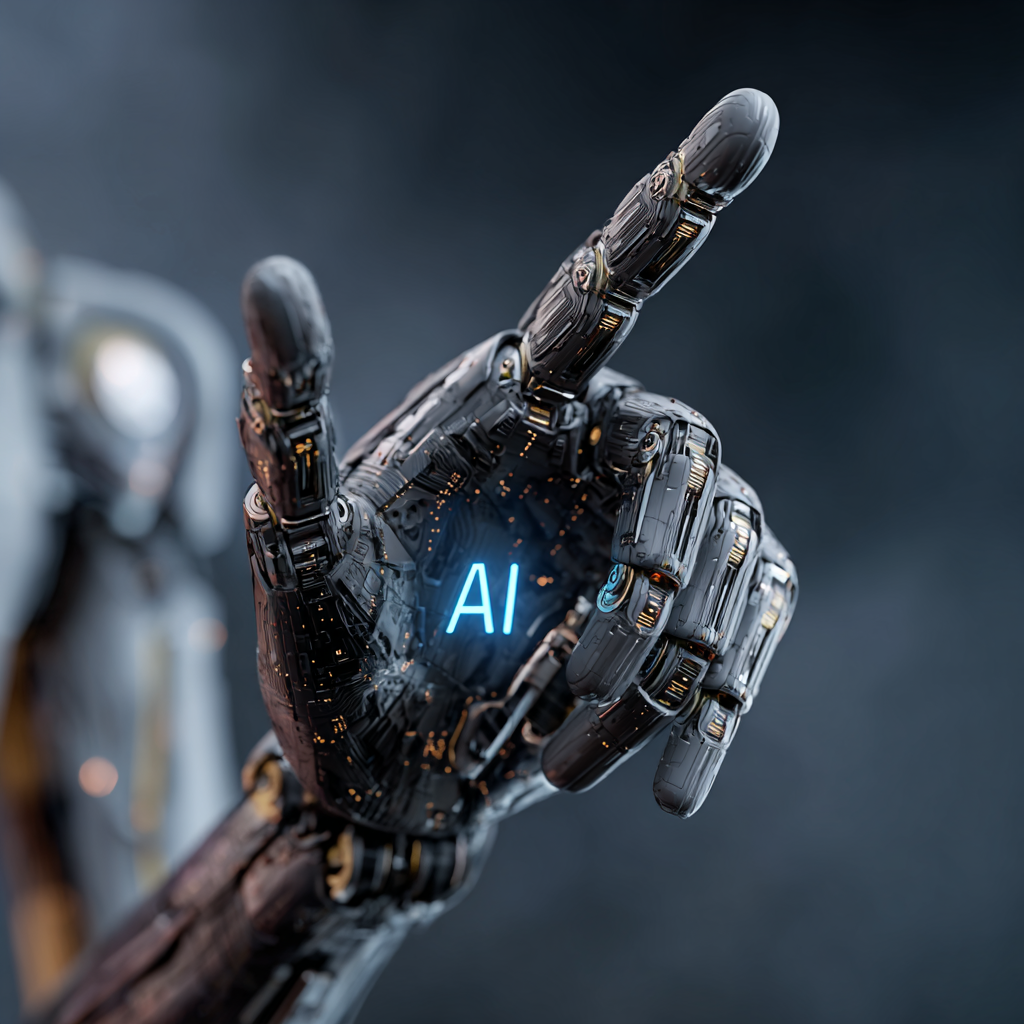
For most of history, solving problems meant collecting tools.
A hammer for nails.
A wrench for bolts.
A calculator for math.
A filing cabinet for records.
Every challenge required a different instrument.
More tools meant more complexity.
More systems meant more friction.
More friction meant slower progress.
Then something unusual happened.
A single technology began to handle many tasks at once.
Not just one job. Not even a few.
But dozens.
Sometimes hundreds.
Artificial intelligence is quietly becoming that tool — the modern equivalent of a Swiss Army knife for the mind.
It doesn’t replace every specialized instrument, but it adapts to almost any situation.
Need research help?
Need writing support?
Need data sorted?
Need patterns spotted?
Need repetitive tasks automated?
One system can assist with all of it.
That’s why AI isn’t just another digital convenience.
It’s emerging as a universal problem-solver — a flexible layer of intelligence that reduces complexity across nearly every field.
And that shift changes how we work, learn, and think.
—
Most Problems Aren’t Physical — They’re Cognitive
When people hear “problem-solving,” they often imagine something mechanical.
Fixing a machine.
Building a structure.
Repairing equipment.
But in today’s world, most problems aren’t physical.
They’re mental.
You’re not lifting heavy objects.
You’re lifting heavy information.
You’re deciding.
Organizing.
Communicating.
Planning.
Comparing.
Interpreting.
In other words, you’re thinking all day long.
And thinking is expensive.
Not financially — cognitively.
Your brain has limits.
It gets tired.
It loses focus.
It misses patterns.
It makes mistakes under pressure.
Artificial intelligence doesn’t get tired.
It doesn’t lose concentration.
It doesn’t mind repetition.
So when you use AI, you’re not just automating tasks.
You’re offloading mental strain.
And once mental strain drops, problems become easier to solve.
—
From Specialized Tools to Flexible Intelligence
Traditional technology is narrow.
Each tool solves one problem type.
Spreadsheets handle numbers.
Calendars manage schedules.
Email handles communication.
If you want to do something new, you install something new.
Artificial intelligence breaks this pattern.
It’s general.
It adapts.
It reshapes itself depending on the task.
The same system that summarizes a report can:
generate ideas
explain complex concepts
categorize information
draft messages
analyze trends
optimize workflows
It’s not limited to one job.
It assists wherever thinking is required.
That flexibility is what makes AI feel different from every tool that came before.
It behaves less like software and more like support staff.
—
Why This Matters More Than Speed
People often describe AI as “faster.”
That’s true — but speed isn’t the real story.
The real story is starting closer to the finish line.
Imagine writing a report.
Traditionally, you start with a blank page.
You outline.
You draft.
You revise.
Hours pass.
With AI, you start with a rough draft.
It may not be perfect.
But you’re editing, not inventing.
That small shift changes everything.
Because the hardest part of most work isn’t finishing.
It’s starting.
AI removes the blank page.
And once momentum begins, progress accelerates.
This applies to nearly every task:
Research becomes summaries.
Planning becomes suggestions.
Data becomes organized automatically.
Instead of wrestling with complexity, you refine solutions.
—
The Invisible Time Leak AI Fixes
Look at your day honestly.
How much time goes to meaningful thinking?
And how much goes to small, repetitive tasks?
Searching for files.
Reformatting text.
Answering similar questions.
Sorting data.
Taking notes.
Scheduling updates.
None of these feel important.
But they quietly steal hours.
AI shines here.
Not in grand gestures.
In tiny fixes.
Automating the small stuff.
Because dozens of small inefficiencies add up to massive losses.
Eliminate them, and suddenly your schedule opens up.
More time for strategy.
More time for creativity.
More time for real problem-solving.
This is how AI becomes transformative — not through spectacle, but through quiet consistency.
—
Why AI Works Across Every Industry
Some technologies benefit only certain fields.
AI benefits almost all of them.
Because every industry relies on information and decisions.
Healthcare analyzes symptoms and histories.
Education explains complex topics.
Finance evaluates risks.
Marketing studies behavior.
Operations optimize systems.
Creative work generates ideas.
Every one of these tasks involves thinking.
And if thinking is involved, AI can assist.
That universality makes AI different from past innovations.
It’s not niche.
It’s foundational.
Like electricity.
Like the internet.
It becomes part of the background — everywhere at once.
—
From Scarcity to Abundance
There was a time when expertise was rare.
If you needed specialized help, you either trained for years or hired someone who had.
Knowledge was expensive.
Now, AI reduces that barrier.
You can access explanations, outlines, and structured guidance instantly.
You still need judgment.
But you don’t need to start from zero.
This creates abundance.
Abundant information.
Abundant assistance.
Abundant productivity.
And abundance changes behavior.
People experiment more.
Build faster.
Test ideas sooner.
Innovation accelerates.
Because the cost of trying drops dramatically.
That’s what universal problem-solvers do.
They lower friction so much that progress becomes inevitable.
—
AI Doesn’t Replace Humans — It Amplifies Them
The biggest misunderstanding about AI is that it replaces people.
In reality, it removes the parts of work people dislike most.
The repetitive parts.
The tedious parts.
The mentally draining parts.
What remains are the uniquely human skills:
Creativity.
Empathy.
Judgment.
Leadership.
Storytelling.
Strategy.
These are things machines struggle to replicate.
AI simply handles the groundwork.
It gathers the information so you can make the decision.
It drafts the content so you can refine the message.
It organizes the chaos so you can focus on what matters.
It’s not a substitute.
It’s leverage.
And leverage has always been how humans accomplish extraordinary things.
—
How to Think Like a Problem-Solver With AI
The most effective users don’t treat AI as a gadget.
They treat it like a thinking partner.
Instead of asking, “Can this tool do this?”
They ask, “What part of this problem can I delegate?”
Use it to:
brainstorm before starting
summarize complex material
draft first versions
organize scattered notes
analyze trends
automate repetitive communication
clarify confusing topics
You don’t need perfection.
You need momentum.
AI provides the push.
Once you’re moving, everything becomes easier.
—
The Bigger Shift Happening
If you step back, something bigger is unfolding.
For thousands of years, humans solved problems alone.
Then we built tools to extend our strength.
Now we’re building tools to extend our minds.
That’s unprecedented.
A universal layer of intelligence that supports nearly every task.
Not just faster.
Smarter.
More efficiently.
More creatively.
This isn’t just another piece of software.
It’s a new way of working.
And once you experience that leverage, going back feels impossible.
—
Frequently Asked Questions
What does “AI as a universal problem-solver” mean?
It means AI can assist with many different types of tasks by helping analyze, organize, and generate information across various fields.
Is AI only useful for technical work?
No. It supports writing, planning, learning, organizing, and creative tasks as well.
Does AI eliminate the need for human thinking?
No. It reduces routine work so humans can focus on judgment, creativity, and strategy.
How does AI save time?
By automating repetitive tasks, summarizing information, and generating first drafts or suggestions.
Can small teams benefit from AI?
Yes. AI allows small groups to accomplish work that once required larger teams.
Is AI difficult to learn?
Many tools are intuitive and designed for everyday users with minimal technical knowledge.
Does AI replace experts?
It supports experts but doesn’t replace experience or human insight.
What’s the biggest advantage of using AI regularly?
Greater leverage — you solve problems faster, reduce effort, and focus on higher-value work.

Leave a Reply