
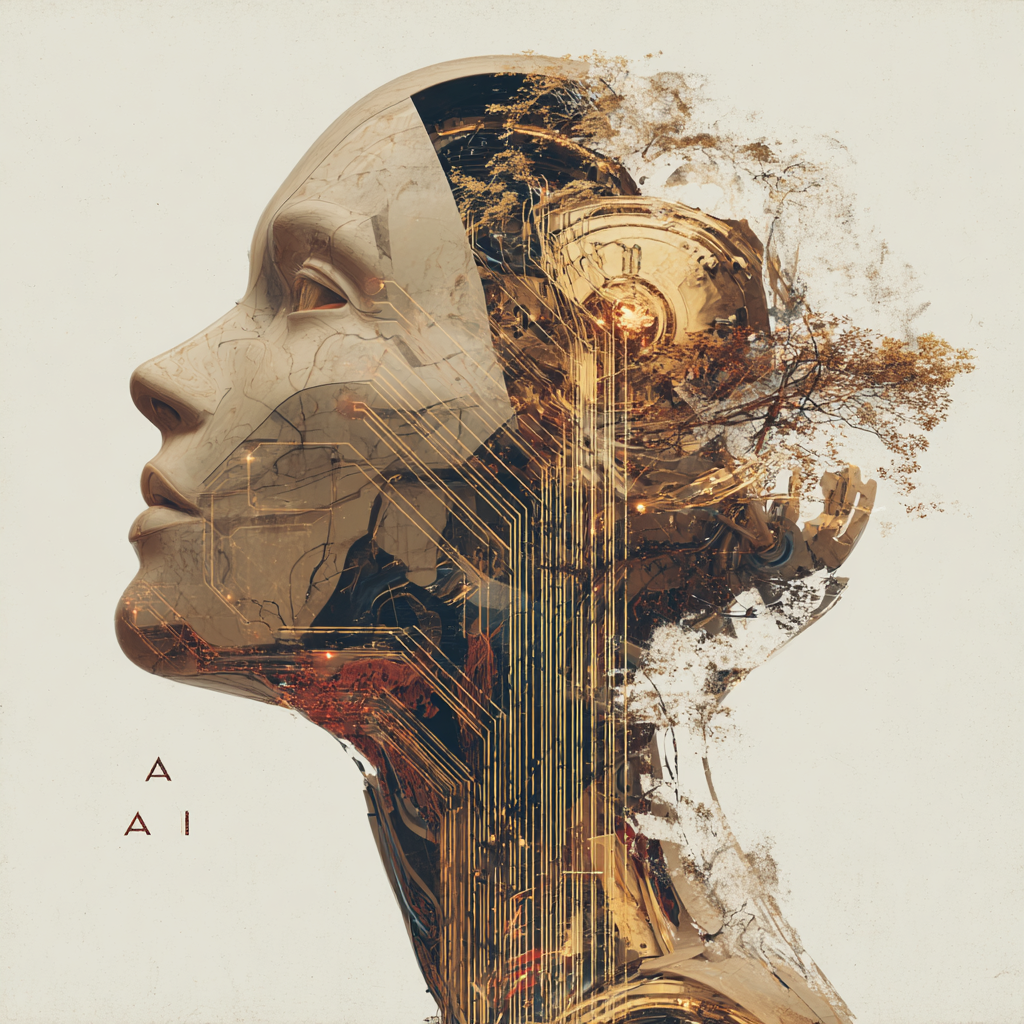
For most of human history, solving problems meant collecting more tools.
A notebook for ideas.
A calculator for numbers.
A filing cabinet for records.
A planner for time.
A specialist for anything complicated.
Every new challenge required something different.
More tools meant more complexity.
More complexity meant more friction.
And friction meant slower progress.
Then something unusual began to happen.
Instead of adding more specialized tools, we started building one system that could do many things at once.
Write.
Analyze.
Organize.
Explain.
Summarize.
Plan.
Artificial intelligence is quietly becoming that system — not just another app, but a flexible layer of intelligence that can step into almost any task and make it easier.
That’s why AI feels different from past technologies.
It’s not just a faster hammer or a smarter calculator.
It’s a general-purpose assistant.
A universal problem-solver.
And when one technology can help with nearly every type of problem, it doesn’t just improve your workflow.
It reshapes how you work entirely.
—
The Real Bottleneck Isn’t Effort — It’s Thinking
Look closely at your day.
You probably aren’t doing heavy physical labor.
You’re doing mental labor.
Reading emails.
Writing messages.
Planning tasks.
Researching topics.
Organizing information.
Making decisions.
Nearly every modern job depends on thinking.
And thinking is surprisingly expensive.
It takes energy.
It drains focus.
It slows under pressure.
It breaks down when you’re overloaded.
You can only make so many good decisions in a day before fatigue sets in.
You can only process so much information before it becomes noise.
This cognitive ceiling is the real limit to productivity.
Artificial intelligence directly attacks that limit.
Not by replacing your brain, but by supporting it.
It handles the repetitive mental work so your brain can focus on the meaningful parts.
And once mental strain decreases, problems feel smaller.
Faster to solve.
Less overwhelming.
More manageable.
—
From Tools to Teammates
Traditional software behaves like a tool.
You click a button.
It performs one action.
Nothing more.
Artificial intelligence behaves differently.
It feels less like a tool and more like a teammate.
It doesn’t just follow instructions.
It assists.
It interprets.
It adapts.
It contributes.
Instead of:
“Calculate this number.”
It’s:
“Analyze this data and show me what matters.”
Instead of:
“Create a document.”
It’s:
“Draft this document based on these ideas.”
Instead of:
“Sort these files.”
It’s:
“Organize everything automatically.”
The shift may sound small.
But it changes how you approach work.
You stop micromanaging tasks.
You start collaborating with a system that shares the load.
That collaboration is what makes AI so versatile.
And versatility is what makes it universal.
—
Why AI Works Across Almost Every Problem
Here’s a simple truth that explains everything.
Most problems today are information problems.
They involve:
Too much data
Too little clarity
Too many choices
Too little time
You’re rarely stuck because you lack strength.
You’re stuck because you lack bandwidth.
Artificial intelligence excels at bandwidth.
It processes enormous amounts of information instantly.
It finds patterns humans miss.
It condenses complexity into simple outputs.
That means it can help with nearly any challenge that involves:
Understanding
Explaining
Organizing
Comparing
Planning
Which describes almost every professional task.
This is why AI doesn’t feel niche.
It feels universal.
Because it supports the thinking behind everything else.
—
The Quiet Magic of Starting at 60%
One of the most overlooked benefits of AI is how it changes the starting point.
Normally, every task begins at zero.
A blank page.
An empty spreadsheet.
A pile of messy notes.
Starting from nothing is slow and intimidating.
AI eliminates the blank page.
It gives you a draft.
An outline.
A summary.
A structure.
You don’t start from scratch.
You start halfway there.
And starting halfway there changes the entire experience.
Editing is easier than creating.
Refining is easier than inventing.
Improving is easier than beginning.
This “head start” effect is one of the biggest reasons AI feels like a problem-solver.
It removes the hardest part of most problems: getting started.
—
Small Time Savings, Massive Impact
People often expect AI to create dramatic, overnight change.
But its real power is subtle.
Saving three minutes here.
Ten minutes there.
A quicker draft.
A faster summary.
Automatic organization.
Each improvement seems tiny.
But add them together across a week.
Or a month.
Or a year.
Suddenly you’ve recovered dozens of hours.
Hours you didn’t realize you were losing.
Those hours become:
More focus.
More creativity.
More strategic thinking.
More breathing room.
AI doesn’t just help you do more.
It helps you think better by giving you space.
And space is where great solutions are born.
—
The Democratization of Capability
In the past, solving complex problems required specialists.
Need analysis? Hire an analyst.
Need writing? Hire a writer.
Need organization? Hire support staff.
Now AI provides a baseline level of assistance to everyone.
Not expert-level mastery.
But enough to move forward.
Enough to reduce friction.
Enough to try.
That accessibility changes everything.
Small teams can operate like large ones.
Individuals can tackle bigger projects.
Ideas that once seemed impossible become manageable.
This democratization of capability is what makes AI so powerful.
It gives ordinary people extraordinary leverage.
—
What AI Doesn’t Replace
There’s a persistent fear that if AI solves problems, humans become obsolete.
But history shows something different.
Technology rarely removes human value.
It moves it.
When machines handle repetition, humans handle meaning.
When machines sort data, humans interpret it.
When machines draft content, humans refine it.
AI is strongest at structure.
Humans are strongest at judgment.
Together, they’re far more powerful than either alone.
So rather than replacing people, AI amplifies them.
It frees you from the mechanical so you can focus on the meaningful.
—
How to Think Like an AI-First Problem Solver
The biggest shift isn’t technical.
It’s mental.
Stop asking:
“What tool do I need?”
Start asking:
“What parts of this problem can I delegate?”
Use AI to:
Brainstorm ideas
Summarize research
Organize notes
Draft first versions
Analyze patterns
Automate repetitive communication
Clarify confusing topics
Then use your experience and intuition to guide the final decisions.
Think of AI as a thinking assistant, not a replacement.
It handles the groundwork.
You handle the insight.
That’s the partnership that unlocks real progress.
—
The Bigger Transformation
Every century has a technology that quietly becomes essential.
Electricity.
Telephones.
Computers.
The internet.
Artificial intelligence is becoming the next one.
Not because it’s flashy.
But because it’s useful everywhere.
It sits between you and complexity.
It reduces friction.
It makes hard things easier.
It turns overwhelming tasks into manageable ones.
That’s what universal problem-solvers do.
They don’t just improve one thing.
They improve everything.
And once you experience that leverage, solving problems without AI starts to feel like working with one hand tied behind your back.
—
Frequently Asked Questions
What does it mean that AI is a universal problem-solver?
It means AI can assist with many types of tasks across industries by helping analyze, organize, and generate information.
Is AI only useful for technical work?
No. It helps with writing, planning, learning, communication, and everyday productivity tasks.
Does AI replace human thinking?
No. It supports thinking by handling repetitive or time-consuming work.
How does AI save time?
By summarizing information, drafting content, organizing data, and automating routine processes.
Can individuals benefit as much as companies?
Yes. Even solo workers can dramatically increase output using AI assistance.
Is AI difficult to use?
Many systems are designed to be intuitive and require little technical knowledge.
Will AI reduce creativity?
Often the opposite. It frees mental energy so you can focus more on creative ideas.
What’s the biggest benefit of treating AI like a partner?
You gain leverage, allowing you to solve problems faster and accomplish more with less effort.

Leave a Reply